
(October 03, 2023) Dr Jim McClure explains…
The holiest day in Judaism has been celebrated each year by millions of Jews throughout the world for over well over 3000 years. On the appointed day in September or early October the celebration begins at sunset on Sunday and ends 25 hours later. In Hebrew it is called ‘Yom kippur’ and in English ‘Day of Atonement.’
1. Source of the commemoration
Yom Kippur is so much more than just a commemoration of a past event and so much more than just a Jewish religious festival. Its significance reaches out to us today and also points to the future.
We read about it in Leviticus 23:27 where God said to Moses, ‘The tenth day of this seventh month is the Day of Atonement. Hold a sacred assembly and deny yourselves, and present an offering made to the Lord by fire.’
The words ‘Day of Atonement’ is the English name for this event. The Hebrew word ‘kippur’ literally means ‘covering’ and Yom Kippur literally means ‘Day of covering.’ So why is it now translated as ‘Day of Atonement?
The name was coined in English 500 years by William Tyndale – the first person to translate the Bible into English from the Hebrew and Greek texts. Tyndale reasoned that Yom Kippur represented a wonderful truth of a reconciliation between sinful humankind and the holy God. It was depicting a relationship with God, broken into many pieces by our sin – which was wonderfully restored when God Himself covered our sin so that it was no longer in His sight.
Because of what God had done, there was now the opportunity of our having our sins covered and of our being ‘at one’ in our relationship with God – or ‘At-one-ness’ as Tyndale defined it. He therefore called it, ‘Day of at-one-ment’ or ‘atonement.’

2. Significance of the celebration
(i) Provision of the Past
The only time anyone was permitted inside the inner sanctuary of the tabernacle, and later in the Holy of Holies in the temple, was on Yom Kippur. On that day each year the high priest would immerse himself in the ritual bath and change into priestly garments. He would then bring a bull, a ram and two goats before the people, sacrificing the bull to atone for his own sins and the sins of his family.
Then two goats were brought to him. One would be sacrificed to the Lord and the other was cast out into the wilderness. The goat selected for sacrifice was killed by the high priest and he again entered the Holy of Holies to sprinkle some of the blood on the altar symbolically to cover the sins of all Israel.
The second goat was then brought to the high priest who laid his hands on it and confessed to God all the sins of the people of Israel. The goat was released into the wilderness and its release symbolised the carrying away of the sins of the people. This act represented their seeking of God’s forgiveness, the covering of their sins of the past year and a restoration of their relationship with God.
Since the destruction of the Jerusalem temple in AD 70 Jews have had to make many changes when observing Yom Kippur. Today, those who seriously celebrate it, fast and abstain from both food and drink and avoid secular pleasures for the 25 hours of the festival.
The principal lessons we can learn from this most solemn day in the Jewish calendar is that God clearly declares that sin separates people from Himself and that in His love for us He provided an opportunity for us to discover His mercy, to receive His forgiveness and to enter into the experience of a restored relationship with Him.
(ii) Pointer to a greater Fulfilment
Yom Kippur was established as a ceremony to be enacted every year as the sacrifices to indicate the covering of the people’s sins – but it was not an end in itself.
The underlying message and the symbolic characteristics of the yearly Yom Kippur pointed to a greater fulfilment in the life and ministry of Jesus Christ. Jesus came personally to accomplish the prophetic aspect of the ritual of Yom Kippur, and the consequence of that fulfillment offered a life-changing discovery of forgiveness to all people and not just to Jews alone.
In Jesus the significance and purpose of the symbols of the ritual were revealed. He came to complete what no ritual alone could ever achieve. The ceremony was, therefore, a pointer to Jesus who would fulfill God’s plan to cover our sin entirely, to offer us complete forgiveness and an eternal relationship with Him.
On Yom Kippur every year the high priests performed the ceremonies, practised the rituals and sacrificed the animals. But, in contrast Jesus, whom the writer of Hebrews describes as our ‘great high priest’ (Hebrews 4:14), offered Himself as a sin offering for us and it was His shed blood that covered our sins.
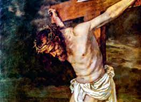
His high priesthood was significantly different because, as Hebrew 7:24-27 affirms, ‘Jesus lives forever, He has a permanent priesthood. Therefore He is able to save completely those who come to God through Him, because He always lives to intercede for them. Such a high priest meets our need – one who is holy, blameless, pure, set apart from sinners, exalted above the heavens. Unlike the other high priests, He does not need to offer sacrifices day after day, first for His own sins, and then for the sins of the people. He sacrificed for their sins once for all when He offered Himself.’
Hallelujah! Doesn’t it thrill you to the centre of your being?
The Yom Kippur ceremony was gloriously superseded by what happened on Calvary when Jesus became the perfect Lamb of God who shed His blood for us!
In John 1:29 we read that when John the Baptist saw Jesus approaching, he cried, ‘Look, the Lamb of God, who takes away the sin of the world!’ On the cross Jesus took our place, shed His blood and covered our sin for ever.
The hymnwriter has expressed it like this:
Bearing shame and scoffing rude,
In my place condemned He stood;
Sealed my pardon with His blood.
Hallelujah! What a Saviour!
(iii) Provision for the Present
While the Jewish ceremony of Yom Kippur had to be celebrated yearly, the ultimate act of atonement, and while we continue to commemorate Jesus death on the cross when we celebrate the Lord’s Supper, those ceremonies are so much more than a commemoration of ancient rituals.
- Jesus’ last words on the cross, ‘It is finished’ (John 19:30) referred only to the indescribable act of redemption that was made available to all people in all generations right up to today.
- In Hebrews 7:27 we read, ‘Unlike the other high priests, He [that is, Jesus] does not need to offer sacrifices day after day, first for His own sins, and then for the sins of the people. He sacrificed for their sins once for all when He offered Himself.’ What Jesus did then is still efficacious, meaningful and dynamically relevant to us today.
- The words of the Graham Kendrick song so wonderfully express it –
The price is paid,
Come let us enter in
To all that Jesus died
To make our own,
For every sin
More than enough He gave
And bought our freedom
From each guilty stain.
Because of Christ’s death on the cross, the opportunity of a restored relationship with Him is available to each and every one of us today.
(iv) Promise for the Future
The Yom Kippur ceremony was a promise regarding to the future. In Hebrews 8:5 we read, ‘They [that is, the priests] serve at a sanctuary that is a copy and shadow of what is in heaven.’ Not only did it point to the atoning death of Jesus on the cross and its relevance to the present – it also contains a promise regarding the future.
At the beginning of this article I commented that the words ‘Yom Kippur’ do not literally mean ‘Day of Atonement’ and that the literal English translation of the Hebrew words is ‘Day of Covering.’ I prefer that literal translation because ‘Kippur’ refers to the fact of the covering of our sins while ‘Atonement’ refers to the consequence of that covering which is the opportunity of being ‘at one’ in a relationship with God.
Let’s explore this a little further. The first reference to any form of ‘covering’ in the Bible is found in Genesis 3. Although the word kippur isn’t used there, the actual act of covering is emphasised. We are told that after Adam and Eve committed the first sin when they disobeyed God’s clear instruction, they realised the seriousness of what they had done and they saw that they were naked. They then tried to hide their nakedness by sewing together some fig leaves to make something with which to cover themselves.

In Genesis 3:21 we read, ‘The Lord God made garments of skin for Adam and his wife and clothed them.’ The Hebrew word for garments is another word Hebrew that refers to ‘covering.’
Notice this, what Adam and Eve provided for themselves did not truly cover them – only what God provided accomplished that covering! This is clearly telling us that our own attempts at covering up our sins will always be inadequate. Only God can do that.
Let’s take this a step further. Yom Kippur contains a promise for the future and is related to the return of Jesus. In Revelation 19:9 John wrote, ‘The angel said to me, “Write this: Happy are those who have been invited to the wedding feast of the Lamb.”’
In Matthew 22 we find a parable Jesus told about that future event. We call it the ‘Parable of the Wedding Feast’ and in it we are told that the king’s son was about to marry his bride. The king had planned a wonderful marriage reception for his son. It was to be a grand celebration, an opportunity to dine with himself and his son! Invitations went out to all the potential guests – who had ignored them! The king then said to his servants, ‘Go the main street and invite anyone you find.’
At royal weddings, it was the customary for the king to provide the wedding clothes for his guests. The king provided these to cover his guests. In this parable we are told that the king noticed that one man was not wearing the wedding clothes that had been offered to him.
Obviously, the man considered that his own covering was quite adequate; but his soiled clothes were not only inappropriate, they were an insult to the host who had himself freely provided the clothes for the wedding. And that guest, who thought that his own covering was good enough, was removed from the wedding celebrations.
The point of the parable is that, despite what we may wish to think our own covering, our own good works, however proud we may be of them, will always be lacking!
- Our fig leaves will always be inadequate in God’s sight.
- Our own rags of righteousness will never allow us admission to heaven!
- Only God’s freely received covering will achieve that.
The prophet Isaiah declared, ‘I delight greatly in the Lord; my soul rejoices in my God. For He has clothed me with garments of salvation and arrayed me in a robe of righteousness’ (Isaiah 61:10).
Here is my question – ‘What clothes are you wearing? The fig leaves of you own self-righteousness or the robe of righteousness that God Himself has provided for your kippur?
Your eternity hinges on your answer!

_____________________________________________
Dr Jim McClure, author of several books and Bible studies, offers them free in electronic version in EPUB, Kindle and PDF formats.

Looking for Answers in a Confusing World is particularly recommended. Questions seeking enlightenment on biblical perspectives are welcomed. Link: jbmcclure@gmail.com
____________________________________________
 Connecting with You!
As always from Dr Jim, excellent teaching. On Sunday past I was reminded of the words of a song ‘All MY iniquities on HIM were laid HE nailed them all to the tree, JESUS the DEBT of MY sin FULLY PAID, He paid the ransom for me..