
(May 17, 2024) Dr Jim McClure shares …
Pentecost has often been described as the ‘Birthday of the Church.’ Why? Because Pentecost was the day when the mission of the church was born.

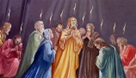
The first Christian Pentecost was a hugely dramatic occasion. ‘Suddenly there came a sound from heaven, as of a rushing mighty wind, and it filled the whole house where they were sitting. Then there appeared to them divided tongues, as of fire, and one sat upon each of them. And they were all filled with the Holy Spirit and began to speak with other tongues, as the Spirit gave them utterance’ (Acts 2:2-4).
Pentecost was not just a random, revival-type experience for those first Christians – it was a fulfilling of Christ’s promise to His disciples, ‘When the Helper comes, whom I shall send to you from the Father, the Spirit of truth who proceeds from the Father, He will testify of me’ (John 15:26 NJKV). The Greek word translated here as ‘Helper’ literally means ‘one called alongside.’ The Holy Spirit walks alongside us in our journey through life.
With the coming of the Holy Spirit, the scene was set for the church to move into the next stage of God’s plan. Jesus had accomplished His part of His mission to rescue humankind and on Pentecost He was handing the next part over to His church.
But how could that small group of ordinary men and women, whom Paul described as ‘not many wise according to the flesh, not many mighty, not many noble’ (1Corinthians 1:26) possibly engage in such an enormous task in their own limited abilities?
The answer is that they couldn’t! They needed –
- A resource beyond themselves.
- God to be alongside them on this new journey.
- Understanding that God’s purpose for the world would not be achieved by human force nor by human ability but by God Himself through His Spirit.
That was what God had said in Zechariah 4:6, ‘Not by might nor by power, but by my Spirit.’ The church needed Pentecost to accomplish God’s mission!The day of Pentecost is significant for many reasons.
1. Presence
As Jesus’ followers met together that Sunday, an unexpected thing happened. First, there was the sound of a mighty wind, then fire flames suddenly settling on each of them.
Can you imagine the effect on us if that same thing suddenly happened to us? In this startling and memorable way God was demonstrating that He was present with His people in fulfillment of Jesus’ promise.
Those who witnessed that event would never forget it. Nor would they forget the significance of those symbols of God’s powerful presence. The Hebrew word for wind (ruach) can also be translated as ‘breath’ or ‘Spirit.’ In Ezekiel’s vision of the valley of dry bones when God spoke to the dry bones, life-giving breath was given to bodies that had died a long time before and they arose to become a mighty army.
That vision affirms that when the Spirit of God is active, new life can spring into being and new possibilities become apparent. On the day of Pentecost the sound of the mighty wind symbolised the powerful, miracle-working, life-transforming presence of the Spirit of God among His people!

The other symbol of God’s activity that day was witnessed in the fire. In Old Testament days fire was often associated with God’s power. Many centuries earlier, when the prophet Elijah challenged hundreds of prophets of false gods, Almighty God clearly demonstrated His power. Those present could not deny what they saw – the power of God was convincingly present as His fire fell from heaven, drying up the water and consuming the offering and the wood, stones and dust. At first the people watched in awe, then they fell down on their knees crying out, ‘The Lord – He is God! The Lord – He is God!’ (1Kings 18:39).
That same powerful presence is still with the church today! The Holy Spirit is so much more than a guest whom we politely invite into our meetings to liven them up and make us feel good about ourselves. On the contrary, it is His active presence that truly enables His people, the church, be what it should be and to do what it should do.
Regrettably the Holy Spirit is often sidelined by the church today as we try to work out how we can have an impact on our community and in the world. Many things we do today as Christians are commendable… but although our organisations, programmes, plans, music, sound systems and special lighting may all be good ideas and worthy of the effort and expense we may put into them, none of those things can adequately substitute for the active presence of the Holy Spirit among us!
On the first Christian Pentecost, God used symbols to demonstrate that He truly was present with His church in the world. We are not alone. God is still with us as the Holy Spirit! How much today’s church needs to embrace that active presence as we seek to live and witness to God’s love in a hostile and disbelieving world.
2. Preparation
On the first Pentecost God was preparing His people for mission. Before then those first Christians were not really inclined to do much about God’s redemptive mission for the world. Yes, they knew that Jesus had come to seek and to save the lost and to call people to repent and believe the good news of forgiveness and everlasting life.
But… even after Jesus’ resurrection His disciples, who had been with Him for three years and who knew that He truly was alive, decided that it was time for ‘business as usual’ and they went back to their ‘normal’ jobs. ‘Simon Peter, Thomas called the Twin, Nathanael of Cana in Galilee, the sons of Zebedee, and two others of His disciples were together. Simon Peter said to them, “I am going fishing.” They said to him, “We are going with you also”’ (John 21:2-3 NKJV).
‘Business as usual’ was not on God’s agenda for them! Clearly, they loved the Lord, obviously they were wholly convinced that He was victorious over death and evidently they enjoyed coming together as followers of Jesus to worship Him… but there was more to Christian discipleship than that. God had a plan for His church that they had not begun to understand: a plan in which they, just ordinary Christians, had an integral part to play.

That Pentecost event realigned their vision, energising their commitment to what lay ahead. It also fired up their willingness to participate in God’s glorious purpose for His world. Once they realised the significance of their relationship with Jesus, life would never be the same. Now they were prepared to move from a ‘comfortable’ and ‘familiar’ lifestyle to a ‘challenging’ and ‘faith- dependent’ assignment of living for Him.
With the outpouring of the Holy Spirit on the day of Pentecost their preparation for a world-transformation mission had begun! And it has never ceased! God’s empowering of His people for His mission by the Holy Spirit did not carry a ‘use-by date’! Today that same enabling Spirit is available to us in our task of turning the world to Him.
How much we need to embrace that same conviction of the early Christians that God is powerfully present with His people. He is still present with us in today’s increasingly spiritually blind, morally decadent and violent world in which godly values are despised as irrelevant and God Himself is dismissed as a fictional character.
The deepening of moral and spiritual darkness today indicates that as Christians we have failed in our God-given task to be ‘salt and light’ in the world. The work of the Holy Spirit is not about giving us a personal spiritual buzz but to use us to turn the world back to God. In that work each of us has a significant role to play. And Pentecost presents a personal challenge to us.

3. Power
Jesus had previously commanded the disciples‘not to depart from Jerusalem, but to wait for the Promise of the Father, “which,” He said, “you have heard from me; for John truly baptised with water, but you shall be baptised with the Holy Spirit not many days from now”(Acts 1:4-5 NKJV).
And then, just before His ascension, Jesus again gathered His disciples together to remind them of that promise He had made to them. He told them, ‘You will receive power (dunamis) when the Holy Spirit comes on you’ (Acts 1:8). The Greek word used here for ‘power’ is that from which we get our word ‘dynamite.’
What had been a closed and static group of around 120 people, became an open, welcoming, dynamic group ever looking beyond itself, ever reaching out to others to bring them into God’s family, ever standing firm in their faith regardless of the consequences.
At Pentecost God empowered His church to conduct and complete the mission Jesus had given it when He had said, ‘Go and make disciples of all nations, baptising them in the name of the Father and of the Son and of the Holy Spirit, and teaching them to obey everything I have commanded you. And surely I am with you always, to the very end of the age’ (Matthew 28:19-20).
The early church needed God’s powerful presence in a hostile and corrupt world to enable it to persevere with boldness, courage and faithfulness and to stand firm and witness to its relationship with Jesus Christ! How much they required God’s power to undertake what could have been perceived as a ‘Mission Impossible’!
Yet, against astonishing odds and in the face of horrendous opposition, the church not only survived but grew and its message spread throughout the world. Those Christians were hounded, persecuted and executed yet they remained faithful and, in the power of the Holy Spirit, doggedly continued to declare that Jesus Christ alone is Saviour and Lord. Apart from the power of the Holy Spirit, the church would have been snuffed out like a candle wick before the end of the first century. But it wasn’t! On the contrary, it continued to grow and, despite the horrific opposition it experienced, it boldly witnessed to the gospel and its life-transforming power.
That same Holy Spirit power that energised that small group of Christians 50 days after the resurrection of Jesus, has remained with us for 2000 years.
- Pentecost is not just a historical event to be commemorated, a religious festival that is celebrated yearly.
- Pentecost was a watershed event in the ongoing life of the church, reminding us that the dynamic power source of the church in the 1st century is the same power source that is available for the church in the 21st.
- Pentecost had Paul declaring ‘How very great is His power (dunamis) at work in us who believe. This power working in us is the same as the mighty strength which He used when He raised Christ from death and seated Him at His right side in the heavenly world’ (Ephesians 1:19-20).
Christians today need to be open to that ‘very great power’ if we are to stand firm against all that would seek to eliminate the church. And we need that same power to further God’s marvellous mission of worldwide salvation and restoration.
4. Proclamation
Notice that the first thing that group of Christians did, following their encounter with the Holy Spirit that day, was to share the good news about Jesus with the crowds outside!
Peter especially demonstrated a remarkable turnaround in attitude and behaviour. All four gospels record that just before Jesus was crucified, Peter panicked and three times made cowardly denials of knowing Jesus, to two different servant girls. But after the coming of the Holy Spirit, we see a different Peter – we discover a man emboldened to proclaim that Jesus Christ is Lord of all and that He is calling for repentance!
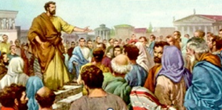
Acts 2:14 records, ‘Peter, standing up with the eleven, raised his voice and said to them, “Men of Judea and all who dwell in Jerusalem, let this be known to you, and heed my words.” With great boldness, passion and powerful persuasion, he proclaimed the message about the Lord Jesus Christ, crucified, resurrected and exalted to God’s right hand. And then he gave this impassioned appeal, “Repent, and let every one of you be baptised in the name of Jesus Christ for the remission of sins; and you shall receive the gift of the Holy Spirit. For the promise is to you and to your children, and to all who are afar off, as many as the Lord our God will call”’ (Acts 2:38-39) And 3000 people were saved that day. The harvest had begun!
Proclamation of the gospel was central to the mission of those early Christians and consequently the church grew at an amazing rate. The theologian Emil Brunner wrote, ‘The church exists by mission as fire exists by burning. … He who does not propagate this fire shows that he is not burning. He who burns propagates the fire.’
In the book of Acts we see some of those ‘burning believers’ and we are reminded time and time again of the result when those new and committed Christians went about their business and shared their testimony with others. Acts 9:31 states, ‘… the church … was strengthened; and encouraged by the Holy Spirit, it grew in numbers, living in the fear of the Lord.’ And in Acts 16:5, ‘So the churches were strengthened in the faith and grew daily in numbers.’
5. Penetration
On the first Pentecost Sunday it was as if God had fired the starting pistol for the church. Its task of living for God and sharing with others the ‘Good News’ of forgiveness and restoration had begun.
The New Testament scholar, JB Phillips, when he translated the Book of Acts into English, named it, The Young Church in Action and made this insightful comment, ‘The newborn church … having neither money, influence nor power in the ordinary sense, is setting forth joyfully and courageously to win the pagan world.’
The 1st century world bears many resemblances to our world today. It was brutal, violent, pleasure-loving and morally corrupt. And if the Holy Spirit had not been given to the early church, its message would not have advanced beyond Jerusalem. But following Pentecost there was a passion in the hearts of those new believers to penetrate the world and to reach out and to witness to others – all others – with the saving and life-transforming message of the love and forgiveness of Jesus Christ.
The mission of the church, which began on that first Pentecost Sunday 2000 years ago, and which was embraced by the first Christians with surrendered devotion to Christ and a sense of uncompromising commitment to His charge, was not completed by the end of the first century but continues today. The world still desperately needs to be penetrated by the good news that God has not forsaken it but still reaches out to us in love and forgiveness.
- Today’s confused, hostile and despairing world still needs – indeed urgently needs – to be reached by God’s good news.
- How necessary it is for the message of hope to penetrate the sense of hopelessness that has gripped so many people today. To challenge the world with that message of hope and God’s love, we need more than our own personal skills, abilities, plans and cleverness.
- Paul fully realised that and wanted the Christians at Corinth to understand it also. He wrote, ‘My message and my preaching were not with wise and persuasive words, but with a demonstration of the Spirit’s power (dunamis)’ (1Corinthians 2:4).

____________________________________________
Dr Jim McClure, author of several books and Bible studies, offers them free in electronic version in EPUB, Kindle and PDF formats.

Looking for Answers in a Confusing World is particularly recommended. Questions seeking enlightenment on biblical perspectives are welcomed. Link: jbmcclure@gmail.com
____________________________________________
 Connecting with You!
Another tremendous meditation from Dr Jim.
A well known song we sing in my home fellowship contains these words:
‘They were gathered in an upper chamber as commanded by the risen Lord
And the promise of the Father there they sought with one accord,
When the Holy Ghost from heaven descended like a rushing wind and tongues of fire,
So dear Lord we seek thy blessing, come with glory now our hearts inspire.’