
(June 06, 2024) Dr Jim McClure teaches… and challenges –
How good is your prayer life?
I guess that for most of us prayer is lower on the ladder of importance in our lives than we would be prepared to admit.

We excuse ourselves by thinking that we are so busy that other urgent things make demands on us and, sadly, prayer is set to one side to be attended to later.
Many churches place an emphasis on the importance of their regular prayer meetings and sometimes Christian organisations plan citywide, and even nationwide, prayer meetings and Christians are encouraged to commit to them. However, valuable and important such gatherings may be, the number of participants is ultimately not the determining factor in the effectiveness of prayer.
Prayer Leading to 18th Century Revival
Let me tell you about Northern Ireland in the mid-19th century, at that time a very decadent country. Drunkenness was rampant, crime was extensive and the jails were full.
In 1857 an English lady, who was visiting Ireland, went to the home of a lady with whom she shared the gospel. Two other women and a young man, who were also present were converted. Under the encouragement of a local minister from the Presbyterian church that small group met regularly for prayer. On January 1, 1858 another person was converted and that was followed by many others. By 1859 revival was spreading rapidly. Thousands were turning in repentance to God and crying out for forgiveness. And as God answered songs of praise and worship permeated the country. In a very short time drunkenness was largely overcome, crime rapidly decreased and prisons emptied.
One writer, J. Edwin Orr, later commented that the 1859 revival ‘made a greater impact spiritually on Ireland, than anything else known since the days of Saint Patrick.’
There is Power in Prayer!
That is a statement we have heard many times and with which most of us was agree. However, agreement does not always translate into practice!
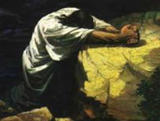
When we read the gospels, one of the things that prominently stands out is that prayer was a very important and central aspect to Jesus’ life. He –
- Spent whole nights in prayer – ‘… Jesus went out to a mountainside to pray and spent the night praying to God’ (Luke 6:12).
- Got up before dawn to pray – ‘Very early in the morning, while it was still dark, Jesus … went off to a solitary place, where He prayed’ (Mark 1:35).
- Rejoiced when He prayed – ‘At that time Jesus, full of joy through the Holy Spirit, said, “I praise you, Father, Lord of heaven and earth”’ (Luke 10:21). The Greek word translated ‘full of joy’ or ‘rejoiced’ literally means ‘jumped for joy’!
- Sometimes wept when He prayed – Luke 19:41 tells us that shortly before He was crucified, ‘As He approached Jerusalem and saw the city, He wept over it.’
- Often removed Himself from the busyness of life, from all the activity by which He was continually surrounded to pray in privacy and quietness – ‘Jesus often withdrew to lonely places and prayed’ (Luke 5:16).
For Christians prayer must not be looked on as a religious ritual but as our privilege and need. God doesn’t need our prayers but we need to develop our relationship with Him that prayer enables.
Prayer is not –
- An exercise in self-righteousness!
- A burden that God has imposed on us!
- A shopping list that we give to God!
Paul gives us this advice, ‘… in everything, by prayer and petition, with thanksgiving, present your requests to God’ (Philippians 4:7).
Let us examine the most famous prayer of all, the one we call ‘The Lord’s Prayer.’ It seems that Jesus mentioned it on two occasions. He first taught it when He was preaching a sermon covering many issues to the crowds that had gathered on a mountain in Northern Israel to hear His message.
The second occasion was in answer to His disciples who wanted to know more about prayer. Obviously, they had noticed that it was of great importance to Jesus and that He spent much time in praying. They also saw that there was an intensity in His praying and that had stirred their interest.
‘One day Jesus was praying in a certain place. When he finished, one of his disciples said to him, “Lord, teach us to pray, just as John taught his disciples”’ (Luke 11:1). We’ll focus on the longer version of Matthew 6:9-15.

The Lord’s Prayer, which is in two parts, is a magnificent example of what our attitude should be when we pray and of the things we should pray about. The first part refers to ‘God’s Dominion’ in which the focus is on God Himself (Matthew 6:9–10).
(i) Specialness – ‘Our Father in heaven’ (v9)
Who is God? What is He like? Throughout history people have worshipped many different gods. The character of those false gods has often been depicted as vindictive and controlling and their alleged interaction with each other and with humanity is largely selfish and domineering. In other words, the description of their characters reflects some of the worst of human characteristics.
But the God whom about whom Jesus spoke stood in stark contrast to those false gods. It was clear to those who knew Jesus that the God about whom He spoke was special in so many ways and particularly special in the loving relationship He had with those who put their faith in Him.
So in answer to His disciples request that He teach them how to pray, the first thing Jesus pointed out was God’s specialness. The one true God is so different from the multitude of false gods whom many people worshipped then – and still worship today! In no way is He to be identified with them. We need to grasp hold of that truth when various people today are telling us that regardless of the particular religion that is followed – Islam, Hinduism, Buddhism or one of the many current religions – we are all worshipping the same God. Nothing is further from the truth!
In Elijah’s day many Israelites had forsaken Yahweh and were worshipping Baal and other false gods. In a dramatic way on Mount Carmel Elijah challenged them to turn again and worship the one true God who had blessed them in so many ways for many centuries.
Elijah’s challenge confronted the Israelites with this reality when Yahweh, God, manifested His presence. They fell to the ground in worship and cried out, ‘Yahweh, He is God! Yahweh He is God.’ The Lord our God is not to be identified with any false god! He is separate from all of them.

In the religions of the false gods humans are seen as servants and slaves. But Jesus revealed that the true God’s relationship with humans was to be compared with that of a loving Father to His children. A profound intimacy is being expressed in the first two words – ‘Our Father.’
Can you grasp the enormity of that phrase? The Creator of heaven and earth, wants us to know Him as our Father! This is where true prayer starts, with an acknowledgement that the Lord God Almighty is our Father! It is such an important concept that in the first 18 verses of Matthew 6, Jesus uses the word ‘Father’ 10 times. He wants us to lay hold on this blessed reality – God is our Father!
Around 60 times in the gospels when Jesus addressed God, the only term He used was ‘Father’! Jesus wants us also to enter and embrace that intimacy of relationship which the term ‘Father’ conveys in the Lord’s prayer. It cements the reality that we are truly part of God’s family.
I remember my own earthly father with wonderful memories and great affection. As I child I was always conscious of his love and trusted him implicitly. My heavenly Father wants me to relate to Him like that!
But what is our heavenly Father like? Jesus’ disciples, who had heard Him speak about so often, were asking the same question. One day Philip said to Jesus, ‘…“Lord, show us the Father and that will be enough for us.”’ And Jesus gave Philip this answer, ‘Anyone who has seen me has seen the Father’ (John 14:8-9).
Theologian J.I. Packer in Knowing God has commented, ‘Everything that Christ taught, everything that makes the New Testament new, and better than the Old, everything that is distinctively Christian as opposed to merely Jewish, is summed up in the knowledge of the Fatherhood of God. “Father” is the Christian name for God.’
Every act of love, caring, kindness and generosity that Jesus did, every word of encouragement and comfort He gave and every act and word of Jesus that denounced greed, hatred, pride, covetousness and cruelty revealed the character of the God our Father.
We who call God ‘Father’ should so live in the familiar relationship we have with Him that it is expressed in our lives. What a challenge that is to us! All too often that precious relationship we have with God our Father is concealed behind the pettiness of our actions towards others and in the moral compromises we make. Our challenge and responsibility is to manifest in our daily lives the fact that God is indeed our Father.
Jesus described God as our heavenly Father. The word ‘heavenly’ helps us grasp the fact that our Father God’s love for us is so profound love that is indescribable. God Himself is infinitely greater than everything that He has created yet He is involved in our lives and personally reaches out to each of us so that we may have a personal relationship with Him. When we pray to our Father in heaven, Almighty God is not at a distance from us.
When Paul was preaching in Athens about the one true God who made everything, he declared, ‘God did this so that men would seek him and perhaps reach out for him and find him, though He is not far from each one of us. For in him we live and move and have our being’ (Acts 17:27-28). What a wonderful truth Paul was affirming – the unique and special God wants to relate to us as our heavenly Father!

(ii) Sanctity – ‘Hollowed be your name’ (v9)
We are so familiar with the Lord’s Prayer that when we say it, the phrase ‘Hollowed be your name’ easily rattles off our tongue. But what does that really mean?
a) Let us look first at the words ‘your name’
It is often claimed that in the Bible we find a great many names attributed to God, such as El Shaddai and Jehovah (Yahweh) Jireh, which are descriptions of God’s character rather than His names. However, when God appeared to Moses in flames of fire on Mount Horeb and told him to return to Egypt and lead the people of Israel out of Egypt, Moses said to God, ‘Suppose I go to the Israelites and say to them, “The God of your fathers has sent me to you,” and they ask me, “What is his name?” Then what shall I tell them? God said to Moses, “I AM WHO I AM. This is what you are to say to the Israelites: ‘I AM has sent me to you.’”’ (Exodus 3:13-24).
The phrase ‘I am who I am’ is related to the word ‘Yahweh’ which is used more than 6800 times in the Old Testament. Yahweh was such a precious and sacred name to the Jews that they decided to substitute the word ‘Yahweh’ with the word ‘Adonai’ which means ‘Lord.’
In our English Bibles we have followed that practice. Every time you see the word LORD (in capital letters) the Hebrew word is actually ‘Yahweh’ and it refers to the absolute greatness of God.
The reference to God’s ‘name’, as it is used in the ‘Lord’s Prayer’, implies all that God ever has been, all that God is and all that God will ever be. God is always-present, all-knowing, all-powerful, all-wise and all-loving.
(b) Jesus also emphasised that God’s name should be ‘hollowed’
The word translated here as ‘hallowed’ is related to the word ‘holy’ which refers to something that is set apart. It is frequently used in the New Testament to refer to being set apart from all that is impure and evil and is applied to all that is good and pure.
When Jesus used the word in the Lord’s Prayer in the phrase ‘Hollowed be your name’, He was affirming that everything about God was to be respected and held in reverence. I like the Good News Bible translation of this phrase: ‘May your holy name be honoured.’
Yet today we so often hear God being blasphemed rather than honoured. In fact the word ‘God’ is often used in mindless, ungodly phrases. And the words ‘Jesus Christ’ are more frequently used in swearing than in worshipping!
This simple phrase, ‘Hallowed be your name’, is full of challenges to Christians. It challenges us to reflect up how our relationship with God influences our lives…
- To bring honour not dishonour to God’s holy name in the way we live and in how we respond and relate to other people.
- To deal with our pride and self-centredness and resentment and anything else which dishonour the God whom we claim to love.
When we pray, ‘Hollowed be your name’, we are recommitting ourselves to living for God in ways that meet His approval and reflect His love.
(iii) Sovereignty – ‘Your kingdom come, Your will be done on earth as it is in heaven’ (v10)
This verse contains two petitions.
(a) ‘Your kingdom come’
The fact is that Almighty God is the King of Kings and the Lord of Lords! Psalm 47:8 affirms, ‘God reigns over the nations; God is seated on His holy throne.’

However, presently throughout the world wars rage, hatred is rampant, morals are distorted, truth is denied and evil flourishes (as was horrendously manifested when Israel was attacked on October 7 last year).
When we pray, ‘Your kingdom come,’ we express the longing for the coming of that time when throughout the world, God will reign and will be worshipped.
The prophets Isaiah and Habakkuk also looked forward to that day when God’s sovereign reign would be manifest worldwide when ‘… the earth will be full of the knowledge of the Lord as the waters cover the sea’ (Isaiah 11:9 and Habakkuk 2:14).
(b) ‘Your will be done…’
Until that day arrives, as citizens of God’s kingdom, we live with the on-going challenge not to conform to this world but to live in ways that conform to the good and acceptable and perfect will of our Sovereign God (Romans 12:2).
That is a personal challenge that each of us needs to address – are you, am I truly seeking to be committed to playing our part in the advancement of God’s will? To be…

____________________________________________
Dr Jim McClure, author of several books and Bible studies, offers them free in electronic version in EPUB, Kindle and PDF formats.

Looking for Answers in a Confusing World is particularly recommended. Questions seeking enlightenment on biblical perspectives are welcomed. Link: jbmcclure@gmail.com
____________________________________________
 Connecting with You!
Thanks, Jim, for this relevant and challenging exhortation. It is sad that as individual believers and church fellowships, prayer does not always have the priority it should have. Someone has penned these words: ‘Little prayer little blessing, much prayer much blessing.’