
(September 02, 2024) Dr Jim McClure shares more about The Greatest Story…
Following the prophet Malachi’s death there were no further prophetic revelations about Israel. For over 400 years the nation went into spiritual decline, and lost its independence first to the Greeks and then to the Romans.
Throughout the centuries the prophets consistently challenged the moral and social corruption which the Bible describes as ‘darkness’ — but also revealed that God had not turned His back on humankind. While they had strongly denounced humanity’s rejection of God, they also affirmed that this had not resulted in God’s rejection of humankind! They also revealed that the message of the Old Testament was not the whole story but just the beginning of a much bigger story.
They further indicated that a new chapter would begin when God Himself would personally get involved on planet earth — a chapter revealing God’s loving plan to reach out to a fallen, broken world by becoming personally involved!

1. The Coming
The apostle Paul referred to the beginning of this new chapter: ‘When the time had fully come, God sent His Son, born of a woman, born under law, to redeem those under law, that we might receive the full rights of sons’ (Galatians 4:4-5).
God’s plan began in a most unexpected way. 2000 years ago Roman rulers called for a census to be taken for tax purposes, requiring everyone to be in their ancestral city for this to take place. For many people that required taking a long and difficult journey.
For a young couple, Joseph and Mary, their journey was particularly tough as they had to travel about 150 kms from Nazareth to Bethlehem. An added complication was that the young woman was pregnant and about to give birth. A further problem was that Joseph wasn’t the father of the child. At first he was greatly distressed about Mary’s pregnancy until an angel appeared to him in a dream and said, ‘Do not be afraid to take Mary home as your wife, because what is conceived in her is from the Holy Spirit. She will give birth to a son, and you are to give Him the name Jesus, because He will save his people from their sins’ (Matthew 1:20-21)
After many difficulties in finding accommodation in a packed-out Bethlehem, Joseph and Mary ended up in a stable and there Jesus was born. That child, born in such difficult circumstances, was God’s answer to a broken humanity that had drifted so far from its loving Creator!

The coming of Jesus to a world that had consistently rejected God went unnoticed by the kings and rulers and all the ‘important people’ in the world, but His birth was heralded by angels to a group of shepherds — men considered as being on the bottom rung of the social ladder. In Luke 2:13-14 we read, ‘Suddenly a great company of the heavenly host appeared with the angel, praising God and saying, “Glory to God in the highest, and on earth peace to men on whom His favour rests.”’
Racing to the stable in Bethlehem where the child was born those humble shepherds, apart from Mary and Joseph, were the first people to welcome the coming of Jesus who was God’s response to a world that had little time for Him.
Grasp this truth! Amazingly and unexpectedly God came into the world personally in the form of a helpless baby! The coming of Jesus is not just recorded in the New Testament — the Old Testament contains hundreds of prophecies about His deity, Messiahship, character, ministry and mission, and His rejection, death, burial and resurrection.
Over 700 years earlier God had given this promise to the prophet Isaiah, ‘The virgin will be with child and will give birth to a son and will call Him Immanuel’ (Isaiah 7:14). ‘Immanuel’ means ‘God with us.’ In the birth of Jesus, God Himself stepped into our world!

God’s answer to the destructive problem of humanity’s sin, that had caused alienation from Him, was in the form of a helpless baby. Every Christmas we commemorate the fulfillment of God’s promise to send us a Saviour and celebrate the historical event of God’s coming to planet earth. However, the glitter of Christmas celebrations can sometimes distract us from the momentous significance of that event — the first step in God’s plan to personally restore the world.
Surprisingly He did not come in royal splendour, in a display of irresistible power. He did not come as an all-conquering king, but largely unnoticed into a stable. Who would have considered that 2000 years later millions of people throughout the world would still be honouring Him, worshipping Him and celebrating His coming?
2. The Challenge
Jesus’ challenge was to rescue a world that with immorally, corruption, cruelty, widespread poverty, wars happening in many places, and political infighting was a constant source of unrest. In other words, very much like today’s world!
When the angel revealed to Joseph that the birth of Mary’s child was part of God’s redemptive plan, he said, ‘… you are to give Him the name Jesus, because He will save His people from their sins’ (Matthew 1:21). ‘Jesus’ means ‘The Lord is salvation.’
That’s the key to understanding Jesus’ ministry. He did not come —

- To make people ‘religious.’
- To make us be ‘nice’ to each other.
- As a moral crusader.
He came as a Saviour —
- To save people from their sins.
- To restore our relationship with God.
- In His God-appointed role — that He alone could fulfill!
Sin not only corrupts us but also our relationships with others. It is expressed when we choose to live according to what we want rather than living according to what God wants. That’s what happened when Adam and Eve disobeyed God’s clear directive and followed their own wishes and desires — the consequences for humanity have been horrendous ever since.
We were created to have a relationship with God! In the core of our being we know that to be true. Many religions in the world testify to that fact. People recognise that there is a relationship dimension missing in their lives and have often tried to compensate by making their own gods.

Jesus revealed that there is only one true God and that He alone has provided that way back into a relationship with Him. He said, ‘I am the way, the truth and the life. No one comes to the Father except through me’(John 14:6). There is no alternative way to a relationship with God apart from Jesus. However piously we may behave, however many good works we may do, however religious our talk may be, however regularly we may attend church, we cannot save ourselves. Only Jesus can save us!
He began His mission by announcing that a new day had arrived. Jesus declared the good news of God’s love for all people, God’s offer of forgiveness and the opportunity to enter a restored relationship with Him. For three years He relentlessly pursued that mission. Through messages He preached, the love He showed and the miracles He performed, He reached out to a lost humanity that had turned away from God.
While many people flocked to hear Him, not everyone was open to the message. Surprisingly, or perhaps not, religious and political leaders were largely strongly opposed to Jesus as they felt their privileged position threatened. Eventually their manipulative words and actions turned public opinion against Jesus and the day arrived when they called out for His death. Even one of His close followers turned against Him.
3. The Crucifixion
One of the Bible’s most precious verses emphasises this truth: ‘God so loved the world that He gave His one and only Son, that whoever believes in Him shall not perish but have eternal life’ (John 3:16).
When He lived among us, Jesus knew that His mission not only included the proclamation of God’s love and offer of forgiveness — but also that He would experience rejection and execution on a cross.
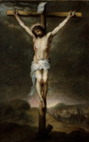
More than 700 years earlier the prophet Isaiah had written, ‘He was despised and rejected by men, a man of sorrows, and familiar with suffering. Like one from whom men hide their faces He was despised, and we esteemed Him not. Surely He took up our infirmities and carried our sorrows, yet we considered Him stricken by God, smitten by Him, and afflicted. But He was pierced for our transgressions, He was crushed for our iniquities; the punishment that brought us peace was upon Him, and by His wounds we are healed’ (Isaiah 53:3-5).
Despite His messages of God’s love and grace, His ministry of compassion and His miracles of healing, Jesus was eventually rejected, scorned, condemned and finally nailed to a cross. His crucifixion was the ultimate evidence of humankind’s rebellion against God. But even that evil and unwarranted act of rejection was met by Jesus’ gracious request to God, ‘Father, forgive them for they do not know what they are doing’ (Luke 23:34).
The cross, an instrument of punishment, shame and pain, became a powerful symbol of love, forgiveness and salvation. The crucifixion of Jesus was a visual demonstration of the magnitude of God’s love for humanity. Paul wrote ‘God demonstrates His own love for us in this: While we were still sinners, Christ died for us’ (Romans 5:8).
4. The Confirmation
When Jesus was placed in the tomb, it appeared that the ‘story’ had come to a distressing end. It was however just the beginning of a new section! Death could not hold Him! Three days later a very alive Jesus appeared not only to His closest disciples but subsequently to hundreds of people.
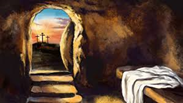
As Robert Lowry’s great hymn declares —
‘Up from the grave He arose;
with a mighty triumph o’er His foes;
He arose a victor from the dark domain,
and He lives forever, with his saints to reign.
He arose! He arose! Hallelujah! Christ arose!’
The curse of death — result of Adam and Eve’s sin of disobedience and rebellion against God — had been reversed! Jesus’ resurrection is at the very heart of ‘The Greatest Story.’ If He had not been raised from death, the story would have ended on a depressing and hopeless note. Paul makes these points —
- ‘If Christ has not been raised, our preaching is useless and so is your faith. …
- if Christ has not been raised, your faith is futile; you are still in your sins.
- But Christ has indeed been raised from the dead.
- For as in Adam all die, so in Christ all will be made alive’ (1Corinthians 15:14, 17, 20.22).
For Adam and Eve the consequence of their rejecting God resulted in death. Jesus’ resurrection reversed that result and offered life. There is nothing that we can do to earn salvation but there is one thing that we can do to secure salvation — place our faith in the ever-living Lord Jesus Christ!
5. The Commission
For forty days after His resurrection, Jesus met His disciples often and prepared them for their ministry that lay ahead. He also gave them an enormous commission — ‘Go and make disciples of all nations, baptising them in the name of the Father and of the Son and of the Holy Spirit and teaching them to obey everything I have commanded you. And surely I am with you always, to the very end of the age’ (Matthew 28:19-20).

That commission was clearly not for the Jews alone but for all people in that generation and in all future generations. Just before His ascension He reinforced its magnitude when He said, ‘You will be my witnesses in Jerusalem, and in all Judea and Samaria, and to the ends of the earth’ (Acts 1:8).
Ten days later, on the day of Pentecost, the mission of the church was launched when with the Holy Spirit’s empowering about 3000 people responded to Peter’ message about Jesus: ‘… the Lord added to their number daily those who were being saved’ (Acts 2:47). From that point the church continued to grow throughout the world. Through the zeal and commitment of the early Christians, and particularly through the writings and the missionary tours of Paul, the church grew at a momentous rate.
However… Christians in various parts of the world were mercilessly hounded and horrendously killed because they professed their faith in Jesus Christ.
6. The Contemporary Church
The contemporary church is part of this chapter that I describe as ‘The Middle.’ The mission and message of the contemporary church is exactly the same as it was 2000 years ago —
- A message of God’s love and offer of forgiveness.
- The promise of eternal life for those who put their faith in Jesus who was and still is…
- God’s answer to a world that is sadly broken, divided and deluded by sin.
Sadly, persecution of Christians is still happening today in various parts of the world at unprecedented and generally unreported levels.
Despite the many changes that have taken place in the world during the past 2000 years, the church’s task today remains the same: To —

- Worship God in spirit and in truth.
- Witness to others the good news that God loves them and wants to save them for eternity.
- Work committedly in living according to the values that God has given to us.
Will we remain committed? Our challenge in these difficult times is great. We are still living in ‘Chapter 2’ of ‘The Greatest Story.’ Chapter 3, ‘The End’ is in front of us. We do not know everything about what awaits us in the future, but the Bible gives us some clues including the promise of Jesus’ return.
As we await the arrival of the ‘last chapter’, we need to be wholly committed to God and to ask Him for confidence to face whatever the future holds!
[Chapter 3 — THE END follows later this month]
_____________________________________________
Dr Jim McClure, author of several books and Bible studies, offers them free in electronic version in EPUB, Kindle and PDF formats.

Particularly recommended — Looking for Answers.
Questions seeking enlightenment on biblical perspectives are welcomed. Link: jbmcclure@gmail.com / The-greatest-story-chapter-1-the-beginning
____________________________________________
 Connecting with You!
For those of us who today are in The Middle and make up the ‘contemporary church’, the challenge is still very much ‘stand up stand up for Jesus.’