
(October 08, 2024) Angeline Selvakumari encourages knowing what God thinks of us and how we should think about ourselves…
Benjamin Franklin, regarded as a founding father of the United States, once stated, ‘If you fail to plan, you are planning to fail.’ Profoundly impactful words! Planning is a crucial aspect of our lives.
- Some individuals excel at both planning and execution.
- Others may plan but struggle to implement their strategies.
- Sadly there’s another group that doesn’t plan at all, just chooses to go with the flow.
I wonder, dear reader, which category do you belong to?
Reality
The Bible reminds us that ‘Many are the plans in a person’s heart, but it is the Lord’s purpose that prevails’(Proverbs 19:21); Proverbs 16:9 states: ‘In their hearts humans plan their course, but the Lord establishes their steps.’
We can make numerous plans regarding our future — education, careers, acquiring assets, weddings, children — to name a few. We continuously think and strategise. However, it is ultimately the Lord’s desires and will that come to fruition.
Thinking is an extraordinary gift from God bestowed on human beings. Even psychologists affirm that thoughts are incredibly powerful; they dictate our actions and emotions. This is why scripture advises us to guard our mind, as what we allow in shapes our thoughts which in turn influence what we say and how we behave. Clear thinking is a crucial aspect of our lives! One thought has the potential to change the trajectory of our lives.
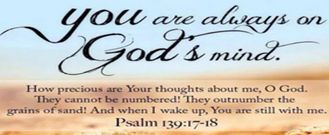
God does not merely have plans; He has great thoughts about us, signifying that He is actively thinking about us! Jeremiah 29:11(Amp) states, ‘I have thoughts and plans for you.’
The reality is that our Creator is so mindful of us! I am blessed to know that He considers not only my future but also my generation’s. It is deeply reassuring to know that I believe in a God who cares for us and thinks about us. What about you, dear reader?
Reassurance
Isaiah 55:8 teaches us that ‘Your thoughts are not my thoughts; your ways are not my ways.’ The way God thinks about us is entirely different from how we see and think about ourselves. Thinking reluctantly about ourselves and our situation holds us back.
For instance, consider what Gideon thought about himself (Judges 6:11-12). Lacking the courage to do so openly, he threshed wheat in a winepress, hiding from the Midianites.

However, when the Lord encountered him through the sudden appearance of an angel, note God’s observation of Gideon: ‘The Lord is with you, you mighty man of valour!’
Yet Gideon still perceived himself quite differently. He responded meekly, ‘O my Lord, how can I save Israel? Indeed, my clan is the weakest in Manasseh, and I am the least in my father’s house’ (v15 NKJV).
Often, it is our own thoughts that hinder us from progressing. Thoughts dominate a crucial aspect of our lives, which is why those Proverb verses advise us to guard our minds. We tend to underestimate the gifts, talents, and calling that have been bestowed on us, leading to a failure in fulfilling our divine purpose. What we allow into our minds profoundly impacts how we think. One misguided thought can derail the entire course of our lives and distract us from the plans and purposes that God has for us!
Gideon had viewed himself as the weakest possible individual, yet in God’s thoughts he was a mighty man destined to deliver His people and defeat their enemies. On accepting God’s thoughts and plans, the reassured Gideon became that mighty man of valour that the Lord thought him to be (Judges 7:15). He routed the Midianites (v19-25) and was even highlighted in Hebrews 11:32.
Refuge
Then there’s David, a man who sought to please God and kept Him at the centre of his life. Despite King Saul’s relentless pursuit of David, God did not deliver him into Saul’s hands. Instead, on more than three occasions, He delivered Saul into David’s grasp!

However, David chose not to harm Saul, declaring, ‘He is the Lord’s anointed’ (1Samuel 26:23). He respected the anointing on Saul, even when the king did not act in accordance with his divine appointment.
On one occasion, when David went to the fortified city of Keilah, Saul viewed this as an excellent opportunity to capture him, believing that David could not escape the strong walls (1Samuel 23). Yet God saved David and aided his escape.
No matter how vehemently Saul attempted to kill David, God consistently protected him. As stated in 1Samuel 23:14, ‘Day after day Saul searched for him, but God did not give David into his hands.’ This insightful young man thought so highly of His God that he could write strongly about his trust in Him, such as ‘In you, Lord, I have taken refuge’ (Psalm 31:1).
Redirection
But then then came a change of direction — as can happen in all our lives. Although we love and trust God, knowing that He loves and cares for us and is able to do more than we can ask or imagine, doubts can creep in, leading us to make poor decisions.

This happened to David — 1Samuel 27 portrays an intriguing chapter in his life, marking one of his lowest points. Verse one begins ‘Then David thought to himself…’ He suddenly feared that Saul would overcome him, believing he could no longer stand against Saul. Consequently, he decided he had to take action to ensure his safety, along with his men. Mistakenly thinking he would be safer in the hands of the enemy rather than in the hands of the Lord, David chose to seek refuge among the Philistines.
During this period, David experienced worldly success. Wherever he went, he was victorious; he amassed wealth, fame, power, and authority, possessing everything he needed and was a conqueror .
David was happy and content, believing that all the ruthless murders he was committing pleased God and justified his actions. Surprisingly, during this period, we do not see David writing any psalms. I believe this laid the foundation for a mentality that allowed him to kill without hesitation… ‘Whenever David attacked a territory, he did not leave a man or woman alive; he took the flocks and herds, the donkeys, camels, and clothing’ (1Samuel 27:9). He even went so far as to align with the Philistines and its King Achish who required him to fight with them against the Israelites and Saul (1Samuel 28:1-2).
We too can confuse success and blessings as divine gifts from God. But even Satan can bestow wealth, fame, and prosperity on us. It is crucial to discern whether our blessings come from God or the enemy! If a blessing leads us away from God — such as work or education that prevents us from attending church or deepening our relationship with Him — it is time to reevaluate our priorities. We must reflect on whether what we enjoy truly originates from God.
Realisation
Once one begins to slide down the slope of backsliding away from God, it becomes a steep decline. In David’s case he descended rapidly. The consequence of his actions was profound: when he returned to Ziklag which had been bestowed on him by Achish, he was shocked to find that everything he had earned was gone.

The Amalekiteshad attacked Ziklag ‘… and burned it, and had taken captive the women and everyone else in it, both young and old. They killed none of them, but carried them off as they went on their way’ (1Samuel 30:1-2). David had lost everything, including his wives and the steadfast loyalty of his men who accompanied him everywhere and fought all his battles.
David felt utterly isolated. He had lost everything… his family, savings, status and fame — all gone in a single night. His own people had turned against him. He had no one to confide in, no one to share his problems or feelings with. 1Samuel 30:6a tells that ‘David was greatly distressed because the men spoke of stoning him.’
Being a leader can often be a lonely experience. When circumstances are favourable, leaders receive praise; however, when things go awry, there is often no one to whom they can express their innermost feelings. Like the others, David had lost everything, yet he had no place to vent his frustrations or yell out his anguish. Can you imagine his mental state?
The good news is that David strengthened himself with trust in his God (v6bMessage). Wow! Finally, he realised how far he had strayed from God. He returned to his God discovering afresh that the Lord was his only source of strength! He understood that God is the ever-present help in times of trouble, capable of helping him in his hopeless situation. (Do you?).
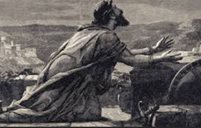
David sought God’s presence — we might say ran to Him — demonstrating his dependence on the Almighty, seeking His direction regarding what to do next. This time, he wanted to move forward with the God’s strength (oh, do read verses 7-31!).
Recovery
When he returned to God (1 Samuel 30:18), David recovered everything. He regained everything he had lost — family, money, fame, status, friends, possessions, and wealth. Imagine that: David got everything back, not only for himself but also for all his men. When we trust in Him, God will find a way where there seems to be none. He can supernaturally open doors.
Perhaps you see yourself in David’s situation, feeling as though you have lost everything and wondering if recovery is possible, thinking I’m all alone in this, is there a way out? The steep downfall in David’s life stemmed from his thoughts, so let us be careful how we think.
God is calling some of us right now to run to Him for strength, encouragement, forgiveness, and restoration — to return to the place where we are meant to be. David did not hesitate to fall into the hands of God — may we learn lessons from David’s life and not hesitate to do the same!
Reassessment
Dear brothers and sisters here’s five good thoughts for any of us in troublesome times —
(1) Sometimes, we wrongly believe that being away from God is preferable.
(2) He may grant us ‘a long rope’ to continue our misdeeds in hope that restoration will follow.
(3) God’s love for us is profound and unfathomable, transcending our sins and disobedience.
(4) Leaving everything behind in heaven, He took on the form of man — to offer us eternal life.
(5) Paul declaration: ‘Though He was God, He did not think of equality with God as something to cling to. Instead, He gave up His divine privileges; He took the humble position of a slave and was born as a human being. When He appeared in human form, He humbled himself in obedience to God and died a criminal’s death on a cross’(Philippians 2:6-8NLT).
Jesus died on Calvary’s cross to bring life and meaning to our existence, providing us with purpose in our lives. He is coming back to reward us, and desires is for us to love Him and engage in an intimate walk with Him.
- Remember in your mind that we are not alone!
- Recognise that our God is a merciful Father, waiting for you and me to return to Him.
- Run to the Father into His everlastingly open arms, and He will orchestrate everything for our good.
Even as David found the good news he needed in God, so can you! Do recall Franklin’s wise advice — Do not plan to fail!
I close with this challenge — do you need to rush back to God? If you do, restoration awaits you!

_______________________________________________

Pastor Angeline Selvakumari is Honourary Editor–in–Chief Echo of His Call, India’s Spiritual Newspaper, and Dr S Sam Selva Raj’s daughter. In furthering Echo of His Call ministries, established 1969, Dr Sam broadcasts 5–minute YouTube messages in English, Tamil, Hindi and Telugu daily, trusting the Lord to provide for the costs. Link: sam@echoofhiscall.org
_______________________________________________
 Connecting with You!
Amen to all you share, Angeline.