
(April 11, 2025) Brian Bell shares encouragingly on an important issue…
This short meditation is drawn from my reading of Deuteronomy 1:17NLT—
‘When you make decisions, never favour those who are rich; be fair to lowly and great alike. Don’t be afraid of how they will react, for you are judging in the place of God…’
These words of counsel were spoken by Moses to men who had been appointed as leaders to help him lead the children of Israel. In verse 13 we’re told they had been chosen by the people because of their—
- Wisdom.
- Understanding.
- Good reputation.
It is a good practice, that had also been used wisely in the first century church— Acts 6:1-6 tells about seven men being chosen as servants in the early fellowship of believers.

Today this type of choice might be made in an election where the people vote for parliamentary candidates… although, sadly, in today’s society that choice is now more often influenced by policy rather than personal character.
But… it should be reflected in our church fellowships today when leaders (irrespective of the titles we may give them) are being appointed and or called!
And here I share some thoughts with you about decision-making—
1. Balanced Decisions
In the context of this Deuteronomy verse stating to ‘never favour’ the test of balance is really a test of character for those chosen to make decisions. Persons who were rich are not to be favoured over those who have less and their standing in society (lowly or great) as used here, is to be of no importance in decision making.
Achieving this balance proved a challenge for the first century believers… for example as believing Jews schooled in the law, began encountering gentile believers and slaves who had embraced the same gospel message as some of their masters had done.
Paul’s letter to Philemon showed how Paul encouraged the ‘rich’ Philemon to forgive and restore the ‘lowly’ Onesimus (v8-18).

I find it challenging that in our world today this standard of decision making established by God should be just as relevant.
God knows our minds, our hearts and our propensity— even our weakness to show favour, which sadly can be influenced in a misguided way.
2. Fearless Decisions
Have you got to make some decisions? Deuteronomy’s ‘Don’t be afraid’ is both comforting and encouraging! Note that the challenge is not to be unduly influenced by how people react to a decision we make: for the decision maker it is a test of resolve.
Fearless decision making is not a tool for making expedient decisions, or decisions driven by our own, or other hidden agenda designed to gain popularity among others or divert them from criticism of us.
This may apply in our ‘church’ situations when a leadership decision may require some measure of discipline to be exercised. Paul gave counsel about this in his letters to the Corinthian believers (1Corinthians 10:24).

A fearless decision however ‘spiritual’ we may consider it to be, is not to be taken as a licence to be disrespectful, even if it involves the exercise of discipline. As believers we should always seek to exercise grace and truth.
3. God-honouring Decisions
Although this Deuteronomy says ‘judging in the place of God’ do note that making a God-honouring decision is not the same as being God! For the decision maker the context here is about discernment.
You’ll recall that old story about a man looking for scriptural direction. He decided to open his Bible randomly and on doing so read the words ‘Judas went and hanged himself’ (Matthew 27:5). Thinking that can’t be the right scripture for me, he closed his Bible and tried again— only to read Luke 10:37, ‘Go and do likewise’!
The objective here is to make a decision which is faithful to scripture, ensure that you are following general scripture principles!
William Carey, born in 1761, came to faith while a young man. He believed there was a need to reach out to those who had never heard the gospel message. At that time even in some ‘evangelical’ circles, this was not considered to be of great importance and he was chastised for suggesting it, even though Jesus had said, ‘Go into all the world and preach the gospel.’
But he was to hear a Christian doctor, John Thomas, speak about the great needs in India and of his intention to return to India but his desire to so with a missionary companion.
William Carey felt his heart moved and was led to respond to the need in India and offered himself for service in India, taking his family with him. The Lord gave him a gift for fluency in languages leading to the printing of the first New Testament in the Bengali language.
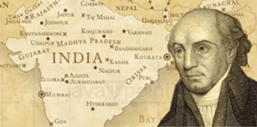
The British government of that era gave William Carey the position of Professor of Sanskrit in Fort William College. Such an esteemed position for Carey who had left school at 12 and by 14 had become a shoemaker, describing himself as being a ‘good plodder.’
Once he arrived in India, Carey never returned to England. Coming to the close of his earthly life, although very weak, he said to a visiting young missionary: ‘When I am gone, say nothing about Mr Carey… speak about Mr Carey’s Saviour.’
William Carey’s motto was— ‘Expect great things from God, attempt great things for God.’
Having faced many difficult and challenging situations which required decisions to be made, William Carey was sold out to living a God-honouring life. He went home to heaven in 1834 aged 73 and is credited with being known as the ‘Father of modern missions.’
4. Greatest Decision of All
As a mid-teenager, I came into a personal relationship with the Lord Jesus. All through my adult life I found it necessary to make decisions. Some of those decisions related to the direction of my working life and my progress through it, and in those times I knew the Lord’s guidance.
In more recent years I had to make a decision about my health and what form of medical intervention I should consider and in that situation I was reminded of the Lord Jesus’ words ‘Healthy people don’t need a doctor— sick people do’ (Matthew 9:12).
It has been my objective to try to always make balanced, fearless and God-honouring decisions. Did I always achieve that objective – No – but I found that God has always remained faithful and gracious with my mistakes.
If you’re reading this article and presently find yourself in a situation needing a decision, I trust these few thoughts help you.
We’re approaching 2025 Easter season… let’s remember how, when faced by a rebellious, sinful human race that fell short of His glorious standard, our Lord made a balanced, fearless and God-honouring decision to take on Himself the punishment we all deserve!
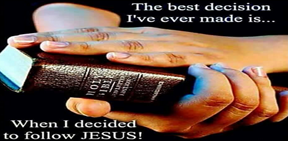
And on the cross at Calvary our sinless Lord Jesus became sin for us and shed His precious blood so that we can make the greatest decision of all— and be reconciled to a Holy God by exercising faith in Christ alone.
Personally speaking—
__________________________________________________
Brian Bell is a diaconate member, Christ Church (Congregational) Abbots Cross, Northern Ireland. Brian describes himself as ‘grateful for the privilege and opportunity given me to serve my Lord.’
__________________________________________________
 Connecting with You!
One comment