
(June 17, 2025) Angeline Selvakumari shares another timely challenge…
It’s hard to believe that we have already completed nearly six months of 2025. It feels as though the year has just begun, yet we are already entering its second half.
1. Divine Favour
This brings to mind the verse from Habakkuk 3:2NKJV, ‘O Lord, revive your work in the midst of the years.’ Complete Jewish Bible reads: ‘Bring your work to life in our own age, make it known in our own time.’
Revive is chayah… to restore, revitalise, ‘breathe life into’ and work is po`al meaning act, deed, do, getting. My prayer is that the Lord will revive you, your family, ministry, business, profession, or studies with His divine favour and mercy in this second half of the year.
Luke 15 is a well-known passage of scripture dealing with restoration. Last month, I wrote about the parable of the lost sheep— the one that the shepherd went searching for, leaving behind the ninety-nine. The entire chapter could be summarised as 99:9:1— the 99 sheep that remained, the 9 coins that were not lost, and the 1 son who left his father’s house, failing to understand his father’s love.

Since Father’s Day is celebrated in India during the month of June, I felt led to reflect on our heavenly Father’s love, drawing from this chapter.
Now I understand that this may not resonate with everyone— particularly those who grew up without a father figure, or those who had fathers who failed to make a positive impact on their lives. To those of you in this situation, I offer my sincere heartfelt compassion.
2. Divine Reflection
I also want to acknowledge the incredible strength and sacrifice of single mothers who have gone above and beyond to fill the role of a father. It is an extraordinarily challenging role, and if you are walking that path, even as a woman stepping into a father’s shoes— hats off to you!
I would also like to honour those who are still waiting and praying to have children… like Zacharias, the father of John the Baptist (Luke 1:13). Even if you do not yet have biological children, I believe God will bless you with many spiritual children to nurture, mentor, and cherish. Take heart, and be of good courage!
I share all this at the outset because of a powerful encounter I once had. After preaching a sermon on our heavenly Father’s love, I was approached by a deeply hurt and angry young woman. Due to painful experiences with her earthly father, she could not comprehend the love of God when it was likened to that of a father. I lovingly explained the true nature of our heavenly Father— how He is unlike any earthly father, and how His love is perfect, healing, and unconditional. Only then did she begin to understand what the love of God truly means.
The role of a father holds profound significance across all cultures. He is often regarded as the head of the family— entrusted with the responsibility of providing for his household, making crucial decisions, and nurturing his children.
3. Divine Truth
It is fascinating to observe how the Bible repeatedly portrays God as a Father. Jesus Himself teaches us to address God in this intimate way: ‘Our Father in heaven’ (Matthew 6:9). Let us explore, through the lens of scripture— specifically Luke 15— what it truly means to be a ‘father,’ whether in a spiritual or biological sense.
This chapter recounts a familiar parable, but allow me to provide a brief summary: The story begins with a wealthy father who has two sons. The younger, driven by his own desires, demands his share of the inheritance and leaves home in pursuit of worldly pleasures. He squanders everything and ultimately finds himself destitute, reduced to feeding pigs and yearning to eat their food. In his lowest moment, he remembers his father— not as someone to return to as a son, but as a servant.

Yet, as he returns home, his father sees him from afar, and runs to embrace him! Welcoming his son home, he adorns him with fine clothes and ornaments and hosts a grand feast to celebrate his return.
Meanwhile, the elder son— who had remained at home faithfully serving his father— feels overlooked and resentful. He refuses to join the celebration, struggling to grasp the depth of his father’s love. Ironically, though he stayed physically close, he remained emotionally distant. In contrast, the younger son, despite his rebellion, had an inner understanding of his father’s character. Even in a far-off land, he believed he could still return— not to be condemned, but to be received.
God is our heavenly Father and His love is constant, unwavering, unconditional. He is a—
a) Loving Father!
While this parable is often viewed with the younger son as the central figure, let’s consider the father as the main character. He represents our loving heavenly Father— a God who loves His children not based on what they do or who they are, but entirely on who He is.
In Exodus 4:22, the Israelites are referred to as God’s firstborn. Despite repeatedly turning away from Him, God continued to rescue and provide for them with a mighty outstretched arm. His love for His children never wavers!
Similarly, in this Lukian story, the father does not reprimand or criticise his son for his failures. Instead, he welcomes him with open arms and celebrates his return with joy. He doesn’t dwell on the past but rejoices in the reunion.
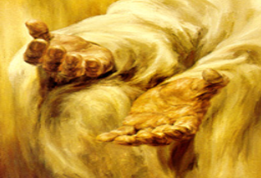
Such is the love of our heavenly Father— immeasurable, compassionate, and freely given! Father God accepts us not based on our worthiness, but out of the abundance of His grace and mercy.
The Bible teaches fathers ‘… do not provoke your children to anger by the way you treat them. Rather, bring them up with the discipline and instruction that comes from the Lord’ (Ephesians 6:4NLT).
Some people believe it’s acceptable to treat our children harshly or speak to them with unkind words. However, this scripture reminds us that even while disciplining our children, we must be gentle and thoughtful, ensuring we do not provoke them to anger. May the Lord help fathers become fathers who reflect His heart.
Our good heavenly Father is always waiting for us to return to Him. No matter how far we may have strayed from Him, He stands ready to welcome us back with love and open arms!
b) Longing Father!
In Luke 15:20, we read ‘But while he was still a long way off, his father saw him and was filled with compassion for him; he ran to his son, threw his arms around him and kissed him.’ This touching moment reveals the heart of a father who had been waiting and longing every day, holding on to hope that his son would return.
In the same way, our heavenly Father longs for a restored relationship with each of us. This is what He desired with Adam and Eve— a deep, intimate relationship. And it is what He desires from us today— He is the longing and patiently waiting Father!
‘Yet the Lord longs to be gracious to you …’ confirms Isaiah 30:18. He is waiting to pour out His mercy, grace, and favour on us— just like the father in the parable.

When we return to Him, He will not interrogate us or shame us. Instead, He will embrace us and bless us with His goodness. If you feel distant from God, unworthy of His love, or hesitant to return— know this: you are just one step away. He is waiting for you now.
c) Legacy Father!
Fathers leaving a legacy is a crucial and often overlooked aspect of fatherhood. The old adage, ‘Like father, like son’ holds profound truth. Fathers not only pass on their genes— they also impart both biological and spiritual characteristics. For many young people, their father is their first hero. They learn a great deal from him— not just how to live, but also how not to live.
Sadly, it is often the negative traits that get passed down more easily. Yet, fathers leave a lasting legacy, whether they realise it or not. They play a vital role in shaping the spiritual lives of their children.
- In Exodus 15:2NKJV, we read: ‘The Lord is my strength and song, and He has become my salvation; He is my God, and I will praise Him; my father’s God, and I will exalt Him.’ The phrase ‘my father’s God’ reflects that faith in God was learned at an early age— through the influence of a father.
- Deuteronomy 32:7NKJV says: ‘Remember the days of old, consider the years of many generations. Ask your father, and he will show you…’
- Psalm 44:1NKJV adds: ‘We have heard with our ears, O God, our fathers have told us, what deeds you did in their days, in days of old.’
- Psalm 78:3–4 declares: ‘What we have heard and known, what our fathers have told us, we will not hide from their children. We will tell the next generation the praiseworthy deeds of the Lord, His power, and the wonders He has done.’

These verses make it clear: Children learn from their fathers, and it is the responsibility of every father to pass on spiritual wisdom and godly values to the next generation.
Unfortunately, many sins in our children’s lives are rooted in patterns passed down from previous generations. But God’s desire is for us to leave a spiritual legacy of blessing, not one of curse.
The Bible provides many examples, particularly among the kings of Israel and Judah, where sons followed their fathers’ ungodly paths and lived meaningless lives. For example, 2Kings 21:21 tells about Amon, the son of Manasseh: ‘So he walked in all the ways that his father had walked; and he served the idols that his father had served, and worshipped them.’
What a tragedy! Manasseh himself was the son of the great King Hezekiah— a man who loved the Lord fervently. Yet, what happened to Manasseh? Why was he not raised with the same devotion to God? This raises an important question for every father: What legacy are you leaving behind?
In 1Kings 11:9 we read, ‘When Solomon was old, his wives led him astray after other gods, so his heart was not fully devoted to the Lord his God, as the heart of David his father had been.’
Throughout scripture, we encounter many fathers whose failure to leave a godly heritage brought ruin on their children and subsequent generations. In stark contrast, kings like Asa, Jehoshaphat, and Josiah deliberately followed in their fathers’ footsteps, establishing enduring legacies of faith. Their obedience not only blessed their own households but also brought peace to neighbouring nations— 2Chronicles 17:10 declares ‘The fear of the Lord fell on all the kingdoms of the lands surrounding Judah, so that they did not go to war against Jehoshaphat.’
4. Divine Legacy
What kind of legacy will we leave for our children and for generations yet to come?
Even God’s servants are not immune to this risk. Moses, Eli, Samuel, and David— each a great servant of the Lord— struggled in their roles as fathers. We may be zealous in building spiritual legacies, as Moses who paired with Joshua or Elijah with Elisha, but are we equally committed to nurturing our own children in the fear and knowledge of the Lord?
- Consider the story of the prodigal son: Despite his rebellion and wastefulness, the father’s longing love never wavered.
- This portrait of the heavenly Father reminds us that God calls us to be loving, patient parents, leaving a faith-filled inheritance that endures.
- May the Lord empower us to model His grace and devotion, so our children and their children may walk in His ways.
- And do share the legacy our Father God has offered us— ‘… God so loved the world that He gave His one and only Son, that whoever believes in Him shall not perish but have eternal life. For God did not send His Son into the world to condemn the world, but to save the world through Him. Whoever believes in Him is not condemned, but whoever does not believe stands condemned already because they have not believed in the name of God’s one and only Son’ (John 3:16-18).
- Do pass this incredible legacy on!

_____________________________________________

Pastor Angeline Selvakumari is Honorary Editor–in–Chief Echo of His Call, India’s Spiritual Newspaper, and newly appointed Head and Chief Functionary of EOHS offices. In furthering Echo of His Call ministries, established 1969, her father, Dr S Selva Raj broadcasts 5–minute YouTube messages in English, Tamil, Hindi and Telugu daily, trusting the Lord to provide for the costs. Link: sam@echoofhiscall.org
______________________________________________
 Connecting with You!
It was also Father’s Day here in my homeland (Northern Ireland).
Now able to speak as a father, I can remember days when my father brought me to where I could be under the influence of my heavenly Father’s word and I did the same with my son and daughter.
I have discovered that we fathers may not always ‘get it right’ but with our heavenly Father’s help we can be an influence for good and His glory.