
(December 10, 2024) Dr Jim McClure shares enlightening truths…
I know that there are some Christians who hold Christmas celebrations in contempt, but I am not one of them. While I do not appreciate many of the secular and commercial exploitation of the event, I like to celebrate this Christian festival. And I appreciate the fact that we have the freedom to honour the birth of Jesus Christ and be thankful for His coming to us.

But I also recognise that it so easy to lose the significance of that event in the midst of many of the contemporary, secular celebrations. Our secular culture celebrates Christmas in increasingly spectacular and expensive ways— spending money on costly parties and performances! The old Christmas song, Deck the Halls includes the words, ‘Tis the season to be jolly, Fa la la la la la, la la la la.’ Well, for many people ’tis certainly the season for partying, lavish spending and celebrating Santa with coloured lights and sparkling trees.
Don’t misunderstand me. I don’t want to be identified as a Scrooge who grumpily says, ‘Bah humbug.’ I really do enjoy many of the celebrations of Christmas because I know precisely what it is we are celebrating— the coming of Jesus, the Son of God, into our world 2000 years ago.
That really is something to celebrates about! And why we need to reflect thoughtfully on some of the facts surrounding Jesus’ birth.
Reflecting on this, I thought about Google maps. Not that app specifically, but what we do when looking up some place on our mobile phone. At first a vast area appears and then, as you use your fingers to open up the map, details of the specific location come into view. It’s something like that that I want to do in this article— bring the ‘tiny town’ of Bethlehem into greater focus, sharing amazing details.
1. Place
Bethlehem is about 9 kms from Jerusalem. Around 700 years before Jesus’ birth, the prophet Micah wrote, ‘But you, Bethlehem Ephrathah, though you are small among the clans of Judah, out of you will come for me one who will be ruler over Israel, whose origins are from of old, from ancient time’ (Micah 5:2).
So, Micah prophesied that the Eternal Ruler (a reference to Christ) would come from the insignificant town of Bethlehem. In fact Bethlehem was so small physically and in terms of population that it was often omitted from lists of the towns of Judah.
At that time of Jesus’ birth Bethlehem was more like a small, inconspicuous village than a town but that was where the Christmas story began. Theologian John Piper has commented, ‘God chose something small, quiet, out of the way, and did something there that changes the course of history and eternity.’
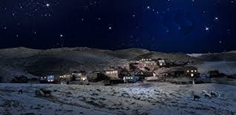
While Bethlehem was just an unimportant humble village in New Testament times, we celebrate it now as a place of unrivalled importance and distinguished above all other towns as the place where the Son of God was born.
2. Person
Bethlehem’s principal claim to fame was that it was the village in which David had been born and in which Samuel anointed him to be a future king of Israel. Apart from that nothing of historical importance took place in that little town… but God had already chosen it to be a significant and memorable place in world history. About 1000 years after David’s birth, a more meaningful birth was to take place in that town— that of Jesus Christ.
Jesus was born in Bethlehem because the Roman Emperor, Caesar Augustus, had decreed that a census be taken throughout the Roman Empire. Jewish families identified closely with their ancestral hometowns, and as Mary and Joseph’s lineage went back to King David, they were required to make the journey of around 150 kms from Nazareth to Bethlehem to be registered. It was clearly a most inconvenient time for them as Mary was in the 9th month of her pregnancy.
Consequently, the most important person ever to enter this world, the Son of God, was born in the least important town of Bethlehem.
That tells us something about how God works— often totally opposite to our expectation! Rather than coming to us as a privileged king in a way that displayed His superiority, power and greatness, He came to us as a helpless, new-born infant. And rather than being born in a palace surrounded by riches, having the very best available medical and nursing help available and being surrounded by servants standing by to attend His every need, the King of Kings was born into the lowliest of circumstances in that tiny and despised village where His only accommodation was a stable and His bed a feeding trough.
The enchanting little scenario of the stable in Bethlehem that we see decorating, churches, shops and town squares at Christmas, is a far cry from the unenviable reality of the scene into which Jesus was born.
The hymnwriter captures the event in these words:
‘He came down to earth from heaven
Who is God and Lord of all,
And His shelter was a stable
And His cradle was a stall.
With the poor and mean and lowly
Lived on earth our Saviour holy.’
In the humble birth of Jesus we are introduced to a lesson that was central to the message that Jesus repeatedly taught— that the path of humility is one that He wants us to walk. Humility marked His coming and the way He lived His life on earth, and humility was a cornerstone in His message to us, one that He declared both by His teaching and example. That certainly is a foremost lesson we can learn from Jesus’ birth in Bethlehem.
- Jesus said many things about living in humility.
- He taught that for His followers humility is not an option but a central requirement.
- If we want to live in a way that honours Him, we must follow His example!
Paul described what that means: ‘Do nothing out of selfish ambition or vain conceit, but in humility consider others better than yourselves. Each of you should look not only to your own interests, but also to the interests of others. Your attitude should be the same as that of Christ Jesus: Who, being in very nature God, did not consider equality with God something to be grasped, but made Himself nothing, taking the very nature of a servant, being made in human likeness’ (Philippians 2:3-7).
Jesus’ birth in the tiny town of Bethlehem, in such an insignificant place and undesirable circumstances, is a challenge to us to engage in some self-examination concerning our own attitudes and behaviour.
The little town of Bethlehem, that was once so insignificant, became the stage for the most exceptional and decisive event in human history. It was indeed a turning point in history and it now holds a place of stunning significance and unique honour as the birthplace as the King of Kings and Lord of Lords.
3. Proclamation
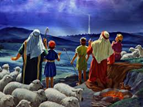
Although Jesus’ birth in a stable in Bethlehem passed almost unnoticed, it was nevertheless proclaimed by an angel to some shepherds who were spending the night in the fields looking after their sheep. Up to the point the night would have been similar to any previous uneventful night. But suddenly there was an unexpected turning point in the shepherds’ lives when that angel appeared. And the brightness of God’s glory flashed around them. Luke tells us that they were terror-stricken.
That encounter in itself would have been the most amazing and frightening event they had ever before experienced. In those days, shepherding was among the poorest of occupations… but they were the people whom God had singled out to be the first to hear the proclamation of the birth of Jesus the Saviour.
The angel said to them, ‘Do not be afraid. I bring you good news of great joy that will be for all the people. Today in the town of David a Saviour has been born to you; He is Christ the Lord’ (Luke 2:10-11).
Notice that the ‘good news’ (the Greek word relates to the gospel) is for all people— not just the Jews, not just for the religious people, not just for the people who occupy important positions in life, not just for celebrities or for those who have accomplished great things in life. No! The ‘good news’ is for ‘all’ people regardless of social position. And it continues to be equally valid for rich people and poor people, for kings in their palaces and homeless people in the street. No one is excluded.
The awe experienced by the shepherds, when this single angel appeared to them and gave them this truly awesome proclamation, was greatly multiplied as the sky was filled with other angels affirming that proclamation— ‘Suddenly a great army of heaven’s angels appeared with the angel, singing praises to God: “Glory to God in the highest heaven, and peace on earth to those with whom He is pleased!”’ (Luke 2:13-14GNB).
Isn’t ‘Peace on earth’ what our hearts long for? In recent years we have seen an increase in hostility throughout the earth both at international and personal levels. A sense of fear is increasing among men and women today and the daily news reports contribute to our lack of peace.
But… even if—
- International threats decrease and arms limitations treaties were signed,
- Nations make ‘peace’ agreements with each other and arms races ended,
- Daily acts of violence that are taking place in our streets are reduced,
- Noble feelings of kindness and generosity were to increase in our society,
- Anger nurtured by protesting groups pushing their divisive agendas were to stop…
… there would still not be peace because, as the angels proclaimed, peace will only come when we please God and give glory to Him!
When God is given His rightful place in our lives, authentic peace of a distinctive kind that will last for ever begins!
- In Bethlehem God introduced His unique ‘peace treaty’ to us by the birth of Jesus.
- At Calvary God signed that ‘peace treaty’ with the blood of Jesus who died for us.
- With Jesus’ resurrection God assured us that His ‘peace treaty’ was valid!
There is, however, one condition for such peace— that we give glory to God by placing our hope and trust in Him. Apart from that act of surrender to Him true peace will elude us.
The proclamation made by the angels to the shepherds so impacted them that ‘… they hurried off and found Mary and Joseph, and the baby, who was lying in the manger’ (Luke 2:16).
This discovery by the shepherds introduced them to the reality of who this baby really was and, when they left the manger, they too helped to propagate the angels’ proclamation, spreading the word about this child’ (v17). How could they not have shared that exceptional encounter with the angels on the hillside and particularly their meeting with the newborn Saviour of the world?
4. Pursuit
The story of the tiny town of Bethlehem doesn’t end with the departure of the shepherds. Matthew’s gospel tells that sometime after Jesus was born some wise men from the east, (the Greek word used to describe them is ‘Magi’) set out to find the one whom they described as the ‘King of the Jews.’ We are not told how they discovered this event. But they were so impelled to determine that truth for themselves that they set out on a journey of probably 800 or more kilometres.
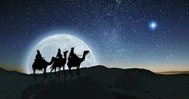
That the magi went to the city of Jerusalem is understandable because they clearly assumed that the newborn King would be found in the nation’s capital city. Herod the Great, however, was not happy to hear this news about the birth of a ‘King of the Jews’, so he sought verification of the possibility of such an event from the Jewish chief priests and teachers of the law. They confirmed that according to the prophet Micah such a child would be born in Bethlehem. But they then showed no further interest in it.
Here is an amazing thing – those high priests and religious scholars knew where the Christ was to be born but they were indifferent to it and went about their own business. Yet Gentile magi, acting on limited information, were willing to make their difficult and long journey from where they lived to worship the Messiah!
Herod’s fear and anger were ignited with the information he received from the religious scholars and he asked them to return and report to him, saying that he wanted to go and worship the child they were seeking. That, of course, was a deliberate lie. Herod wanted to kill Him. The magi were warned in a dream of Herod’s vile intent and didn’t return to him.
Notice this: In their pursuit of the newborn ‘King of the Jews’ the magi had thought that the most obvious place for such a prestigious birth would be the royal palace in the capital city of Jerusalem. Their rationalisation had led them to a wrong conclusion. When they resumed their quest, they discovered that the star unexpectedly led them to the insignificant tiny town of Bethlehem.
Respected pastor, A.W Tozer, in his book The Pursuit of God, wrote, ‘We pursue God because, and only because, He has first put an urge within us that spurs us to the pursuit. “No man can come to me,” said our Lord, “except the Father which hath sent me draw him.” … The impulse to pursue God originates with God, but the outworking of that impulse is our following hard after Him.’
In their pursuit of Jesus the wise men had followed the guiding star, but when they took their eyes off the star and followed their own inclination, they headed in a wholly wrong direction and ended up in Jerusalem rather than Bethlehem. That is a mistake that humanity made right from the beginning when Adam and Eve followed a path of their own choosing rather than that of God’s directing. And what chaos resulted in that decision!
It was only when the magi risked pursuing God’s guiding, especially as it appeared to be leading in an unlikely direction, that they entered into the presence of the King of Kings and the Lord of Lord, fell on their knees before Him, offering their gifts to Him and worshipping Him.
5. Promise
The account of their journey teaches us that our preferred pursuit of Jesus often lies outside our experience and expectation. But it’s a journey worth taking! Finding Jesus and worshipping Him is the most eternally rewarding journey we can take. On finding Him we have His promise— ‘I give them eternal life, and they will never perish’ (John 10:28).
Have you chosen the journey that will take you to Jesus? Have you found Him and bowed in worship before Him? That ultimately is the big question we need to ask ourselves this Christmas.
The insignificant tiny town of Bethlehem became one of stunning significance that for the last 2000 years has been celebrated throughout the world as God’s stepping stone into the world.
____________________________________________
Dr Jim McClure, author of several books and Bible studies, offers them free in electronic version in EPUB, Kindle and PDF formats.Particularly recommended— Looking for Answers in a Confusing World

Questions seeking enlightenment on biblical perspectives are welcomed. Link: jbmcclure@gmail.com. Linking articles: Luke’s Christmas Message / Humble Shepherds Heard It First
___________________________________________
 Connecting with You!
As always, excellent scriptural presentation and challenge from Dr Jim.
Encouraging to remember God often chooses those things or even people we may consider as ‘insignificant’ to fulfil His divine purpose.