
(January 24, 2025) Dr Jim McClure shares a timely challenge from history…
We’re living in a time of great political upheaval, international hostility, social division and moral confusion! Sometimes it’s hard to watch television news for so many reports are about violence and bloodshed and protestors chanting threatening slogans. In fact, to a greater or lesser degree this has always been a significant part of our world’s sad history.
Among the major cities of the ancient world was wicked Nineveh, the Assyrian Empire’s capital city. It had achieved great power which lasted around 300 years, from around 911 BC to 609 BC.

We’re familiar with the book of Jonah with its story of his visit there. Jonah really was loath to go there because he did not want to entertain the possibility that God would forgive the corrupt and violent people living there.
The book of Nahum, whose name means Comfort, is unfamiliar to most people, and is difficult to read because its focus is on the destruction of Nineveh that was soon to take place. Some of the descriptions Nahum contains are alarming!
1. Context of Nahum
In Nahum’s day the dominant political force was the Assyrian Empire. For three centuries, Assyria had extended its rule over surrounding nations including the eastern coast of the Mediterranean and areas that today we call Syria, Lebanon, Turkey, Iraq and Iran. It’s capital, Nineveh, was in present day Iraq.
For more than a century the Assyrians were in conflict with Israel and in 721 BC Samaria, northern Israel’s capital city, was captured and thousands of Israelites were scattered throughout various parts of the Assyrian Empire. That dispersion resulted in what is described as the ten lost tribes of Israel. The two remaining tribes, who lived in Judah, were also attacked by the Assyrians but the city of Jerusalem resisted and survived.
Around 40 years before the northern nation of Israel was destroyed, God instructed Jonah to go from Judah to Nineveh and preach His message. Knowing the violent political intentions of Assyria and being fully aware of the corruption and indescribable cruelty of the people of Nineveh, we can understand Johah’s unwillingness to go there on an evangelistic mission!

However, the book of Jonah reveals that the people of Nineveh responded to the message Jonah preached and turned to God, but… following that period of repentance, moral and spiritual decay once again engulfed that capital city!
Nahum, who lived in Judah around 100 years later, was fully aware of Assyria’s history of corruption and violence and he especially would have been painfully aware of what Assyria had done, particularly to his fellow Israelites in the northern nation of Israel when it had been annihilated. In Nahum’s day Assyria was still devastating the towns and countryside of Judah but failing to capture the city of Jerusalem.
It was against this background of war, stress, trauma and impending devastation in Jerusalem that God raised up Nahum to prophecy to the people of Jerusalem.
2. Character of God
What is God like?
Unfortunately many Christians hold a very misguided understanding God’s character that can range from a belief that He is a harsh and demanding master to a belief that God is really ‘nice’ and easy-going, a divine friend who just wants to do nice things for us!
So the question is, ‘What is God like and what does He expect from us?’ The book of Nahum begins with three descriptions of God’s character:
(i) Wrathful
‘The Lord is a jealous and avenging God; the Lord takes vengeance and is filled with wrath. The Lord takes vengeance on His foes and maintains His wrath against His enemies’ (Nahum 1:2).
God is here described as ‘jealous.’ This may appear to be an unexpected self-description, but the Bible often uses it of Him. For example, after God delivered His people from their captivity in Egypt, He gave them this commandment: ‘Do not worship any other god, for the Lord, whose name is Jealous, is a jealous God’ (Exodus 34:14).

We would normally consider that jealousy is not a positive characteristic. We think of it in terms of resentment, low self-esteem and insecurity which result in envy and pettiness. So why does God use the adjective ‘jealous’ to describe Himself? Is that really what God is like?
Of course not! The Hebrew word translated as jealous is qanno and refers to a profound protective passion. A better word to describe that ‘protective passion’ would be zeal. The word used in this verse is not expressing a negative vice but a positive virtue. It’s the kind of zealous virtue that is present in all good marriages and expresses the commitment to keep the relationship intact.
God is zealous for us! He has a fervent and wholly committed zeal for His people whom He loves so much. His love is powerful, profound and protective! Rather than having a shallow understanding of God’s love we need to grasp the intensity of His love has for us. That most well-known Bible verse— John 3:16— expresses that ‘God so loved the world that He gave His only Son.’
Paul makes this comment, ‘I pray that you, being rooted and established in love, may have power, together with all the saints, to grasp how wide and long and high and deep is the love of Christ, and to know this love that surpasses knowledge’ (Ephesians 3:17-19).
God is also described in in Nahum 1:2 as an ‘avenging God.’ Vengeance is usually considered to be a petulant, negative reaction that will cause pain to someone who has offended or hurt us in some way. However, when God avenges a wrong, He doesn’t act out of a petty bad temper but out of a righteous anger directed at those who do evil by defying His authority, disobeying His law and disregarding His will. He will indeed, in His own time, act against those who oppose Him, declaring, ‘It is mine to avenge; I will repay’ (Deuteronomy 32:35).
(ii) Angry
‘The Lord is slow to anger and great in power; the Lord will not leave the guilty unpunished’ (Nahum 1:3).
But God’s anger is not like our anger. Our anger can be easily provoked— especially when we feel personally offended— and such anger can unnecessarily cause much damage. We know that to be true when we look at some our own past actions. Sometimes long-term relationships have been destroyed because of an angry word or action. Sometimes even churches have been rendered ineffective in their work and witness because of uncontrolled anger.
Anger in itself is not wrong. It is right to feel anger when we see injustice being inflicted or when innocent children suffer at the hands of evil and violent people. There are many situations in which anger is a very appropriate response.
Paul gave this advice to Christians, ‘In your anger do not sin’ (Ephesians 4:26). An angry response to something with which we may disagree can sometimes lead to all kinds of troubles and disasters that may have long-lasting and destructive consequences!
God’s anger however is just and not reactive. It’s a righteous anger against the sin of individuals and the sin of nations… and Nahum affirms that God will not allow evil to go unpunished. It is much better for us if we do not take revenge into our own hands but to leave the act of vengeance for perceived injustices in the hands of God! Paul gives this wise advice in Romans 12:19, ‘Do not take revenge, my friends, but leave room for God’s wrath, for it is written: “It is mine to avenge; I will repay,” says the Lord.’ God alone has the power, that is, the ability to execute His justice.

(iii) Good
‘The Lord is good, a refuge in times of trouble. He cares for those who trust in Him’ (Nahum 1:7).
This statement that God is good is so simple, yet so profound in what it means.
Because God is good, there is no wickedness in Him and His plans and intentions for us are good. There is nothing evil or deceptive or devious about Him. The psalmist summarises God’s character in this straightforward way, ‘You are good, and what you do is good’ (Psalm 119:68).
The ‘good news’ that Jesus proclaimed was that God’s love, compassion and forgiveness is freely available to us if we want it. Jesus described Himself as the ‘good shepherd’ who freely and lovingly lays down His life for those who put their faith in Him. In His death on the cross, He willingly accepted the pain and suffering of crucifixion so that we may have eternal life. That’s how good God is!
Years ago I used to sing a simple chorus that declared God’s goodness—
‘God is so good,
God is so good,
God is so good,
He’s so good to me!
Such simple words yet how profound is their message! As Nahum wrote, ‘He cares for those who trust in Him.’
3. Condition of Nineveh
The book of Nahum begins by identifying precisely about whom this message was addressed— ‘An oracle concerning Nineveh’— an impressively large city, trade centre and place of power. It also had a reputation for extreme violence and brutality. When God had earlier instructed Jonah to go to evil Nineveh and rebuke it, he had a deep dislike of, believing that they fully deserved God’s anger and judgment and tried, unsuccessfully, to avoid going.
However, the Ninevites did respond eagerly to Jonah’s message and received God’s mercy and forgiveness. But when Nahum prophesied about 100 years or so later, Nineveh had reached a stage where the grace and mercy of God that it had once experienced and rejoiced in, had been rejected and was withdrawn. Their return to their evil, violent and cruel ways had replaced their brief period of repentance!
Nineveh, indeed the whole nation of Assyria, had chosen evil over good, hatred over love, domination over service and pride over humility. History records that the Assyrian army would often perform terrifying atrocities on the people they defeated! Now Nineveh stood against God and He was about to come against Nineveh!
In Nahum 2 the prophet graphically described Nineveh’s coming destruction and the imagery he used is a reminder to us that no earthly power can withstand the judgment of God. In verses 8-10(GNB) Nahum wrote, ‘Like water from a broken dam the people rush from Nineveh! “Stop! Stop!” the cry rings out— but no one turns back. Plunder the silver! Plunder the gold! The city is full of treasure! Nineveh is destroyed, deserted, desolate! Hearts melt with fear; knees tremble, strength is gone; faces grow pale.’
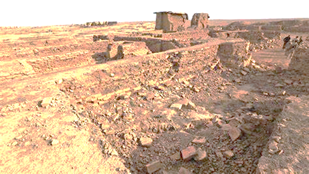
And in verse 13 we read, ‘“I am against you,” declares the Lord Almighty. “I will burn up your chariots in smoke, and the sword will devour your young lions. I will leave you no prey on the earth. The voices of your messengers will no longer be heard.”’
Chapter 3 continues to describe the horrors and detestable practices of the Ninevites and begins with the denunciation, ‘Woe to the city of blood, full of lies, full of plunder, never without victims!’ It was violent and demonic, morally corrupt and cruel, murdering innocent children. Their defences in which they had placed so much confidence would readily crumble, and all their riches would disappear. The book of Nahum ends in these solemn words, ‘Everyone who hears the news about you claps his hands at your fall, for who has not felt your endless cruelty?’
Around 612 BC an alliance of nations under the leadership of the Babylonians defeated the Assyrians and Nineveh itself was utterly destroyed as Nahum had prophesied. It was God Himself who was Nineveh’s enemy and the forces of the Babylonian alliance were the means by which His will was accomplished. The writer of Hebrews says, ‘It is a terrifying thing to fall into the hands of the living God!’ (Hebrews 10:31).
Nineveh had been the most prominent city in its day but following its defeat disappeared from history altogether until the 1840 and 1850s when remains were evacuated and many sculptures were discovered.
4. Challenge to Us
The demonic, destructive influence that had enveloped the nation of Assyria and particularly the city of Nineveh, continues to be evident in many nations throughout the world today, even in countries that in the past had experienced times of revival and had embraced God’s invitation and values!
Such principles are being eroded and replaced by spiritual, social and moral disruption—
- Family structures are fracturing.
- Ethical values are eroding.
- Lies are replacing truth.
- Violence is increasing.
- Families are becoming progressively dysfunctional.
- God is regularly held in contempt and mocked.
- His name is increasingly used only as a swear word.

How foolish it is to scorn God and ignore His word because, as Galatians 6:7 reminds us, ‘Do not be deceived: God cannot be mocked.’
To mock God is to invite His judgment! Nahum’s message on that is clear: There is no power on earth that can withstand the judgment of Almighty God.
How we need to see God’s Spirit move throughout the nations! How much we need to see God’s Spirit moving throughout Australia, challenging us as a nation and as individuals and bringing repentance and conviction and such a rediscovery of His love and mercy that we fervently cry out to Him for forgiveness and restoration. We need revival!
That is the challenge of Nahum for us in our day. Can we hear it?— will we respond?
5. Conclusion— God is in control!
Nineveh’s pride and arrogance which led the Assyrians to believe that they were invincible, were crushed by God. Nahum’s message is clear— despite human pride God is, and always will be, in control!
While Nahum graphically described God’s judgment, at the heart is the affirmation: ‘The Lord is good, a refuge in times of trouble. He cares for those who trust in Him’ (Nahum 1:7).
Nahum challenges us to take seriously the corruption of sin, to place our confidence in God, respond to His love and experience the forgiveness and mercy that He offers. We’ll find the comfort of God.
Jesus summed it up in two powerful sentences: ‘God so loved the world that He gave His one and only Son, that whoever believes in Him shall not perish but have eternal life. For God did not send His Son into the world to condemn the world, but to save the world through Him’ (John 3:16-17).

____________________________________________
Dr Jim McClure, author of several books and Bible studies, offers them free in electronic version in EPUB, Kindle and PDF formats. Particularly recommended— Looking for Answers in a Confusing World

Questions seeking enlightenment on biblical perspectives are welcomed. Link: jbmcclure@gmail.com.
___________________________________________
 Connecting with You!
As always, a great article from Dr Jim, full of truth, challenge and encouragement.
In my home church we still sing that little chorus ‘God is so good’ with a few extra verses.
One other old song this article brings to my mind is ‘God is still on the throne.’