
(March 04, 2025) Dr Richard Winter shares some great Easter points…
Alexander the Great once found his philosopher friend Diogenes standing in a field, looking intently at a large pile of bones.
Asked what he was doing, the old man turned to Alexander and replied, ‘I am searching for the bones of your father Philip, but I cannot seem to distinguish them from the bones of the slaves.’
Alexander got the point! Everyone is equal in death. From the greatest to the least, from the most beautiful to the most ordinary, death is the universal equaliser. And it can happen unexpectedly— indeed at any time!
Jesus’ death, reverenced again this April 2025 Easter, was—
Prophecy Fulfilled!
Most of us know the shock and grief that comes with the death of a loved one or colleague: the sense of loss, perhaps numbness or anger, perhaps the realisation of our own mortality.
Jesus— the King of the Jews, the Messiah, the Son of God— shared the human experience of death. His heart stopped beating, His lungs ceased their constant inhaling and exhaling, and the electrical impulses within His brain slowed and subsided into nothingness.
But note— He had fulfilled His commission and Old Testament prophecies such as Isaiah 53. And what His Father desires for us— John 3:16-18a: ‘For God so loved the world that He gave His one and only Son, that whoever believes in Him shall not perish but have eternal life. For God did not send His Son into the world to condemn the world, but to save the world through Him. Whoever believes in Him is not condemned.’
Yes, human beings can die unexpectedly, but Jesus’ death was timed by God! As verse 10Mge reads ’… it’s what God had in mind all along, to crush Him with pain. The plan was that He give Himself as an offering for sin so that He’d see life come from it— life, life, and more life. And God’s plan will deeply prosper through Him.’
Perfectly Timed!
Each of the gospel writers describes the event of Jesus’ death:
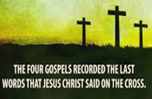
- ‘When Jesus had cried out again in a loud voice, He gave up His spirit’ (Matthew 27:50).
- ‘With a loud cry, Jesus breathed His last’ (Mark 15:37).
- ‘When He had said this, He breathed His last’ (Luke 23:46).
- ‘When he had received the drink, Jesus said, “It is finished.” With that, He bowed His head and gave up His spirit’ (John 19:30).
But… none of the gospel writers focuses on the physical sufferings of Jesus. Each tells part of the whole horrific story, with his own emphasis and understanding of its significance. The death of Jesus was not only unusual— it was unique.
Jesus shared the common experience of death that we all must encounter. Some people will die accidentally, others by their own hand; some die deserving death; others unjustly or prematurely— but all die. Yet Jesus’ death was unique because it was perfectly timed.
Also… people die in different ways. Sometimes the spirit leaves peacefully while the person is asleep. Sometimes it is violently removed, and there’s an agonising battle as the sufferer struggles frantically to hold onto life.
Soviet dictator Joseph Stalin died in 1953, and his daughter Svetlana Alliluyeva, in Twenty Letters to a Friend, penned this graphic description of his last moments: ‘The death agony was horrible … At what seemed like the very last moment he suddenly opened his eyes and cast a glance over everyone in the room … He suddenly lifted his left hand as though bringing down a curse on us all. The gesture was incomprehensible and full of menace … The next moment, after a final effort, the spirit wrenched itself free of the flesh.’
Not so with Jesus: ‘After He took the wine, Jesus said, “It’s done . . . complete.” Bowing His head, He offered up His spirit’ (John19:30Mge). Even as He hung suspended by Roman nails between earth and heaven, He was in control, bringing His life mission to its ultimate climax.
Powerful Willingness!
St Augustine reminds us that ‘Jesus gave up His life because He willed it, when He willed it, and as He willed it.’ With euthanasia we could choose the mode and time of our death, but we’re not masters of our spirits, able to dismiss them and expire. Jesus had that power, and He dismissed His own spirit; in this respect His death was unique.
His death was also an act of worship! Throughout His life Jesus pleased His Father. At His baptism heaven opened and God declared, ‘This is my Son, whom I love; with Him I am well pleased’ (Matthew 3:17).
To the persecuting Jews Jesus said, ‘I seek not to please myself but Him who sent me’ (John 5:30).
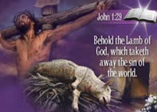
With the Old Testament sacrificial system in mind, the writer of Hebrews reminds us that Jesus offered not a lamb or a bull but Himself in sacrifice to God. Hebrews 9:14 reveals that on the cross Jesus ‘offered Himself unblemished to God.’ (See also John 1:29).
Jesus was both the person offering the sacrifice for sin, and the sacrifice! Nothing less would take away the sin of the world, and nothing more valuable could take His place.
Unlike the temple priests who first sacrificed an animal to remove their own sins before sacrificing on behalf of the people, Jesus offered to God His own body— His own life – for our sins. In doing so, He demonstrated His complete obedience to God as His holy Father, and the complete worthiness of God as the object of His worship. In this respect also His death was unique.
When Jesus dismissed His spirit and died, the soldiers stationed nearby were surprised He had died so quickly; some victims remained alive for up to two days before dying.
They were not the only ones surprised. Across the valley, in the city centre, at the precise moment of Jesus’ death, ‘the curtain of the temple was torn in two from top to bottom. The earth shook and the rocks split. The tombs broke open and the bodies of many holy people who had died were raised to life’ (Matthew 27:51-52). The death of Jesus had supernatural consequences.
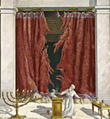
The enormous, thickly lined curtain separating the holy of holies from the holy place was torn in two, symbolising that through the death of Jesus the way into God’s immediate presence was open to all, regardless of the distinctions often made between clergy and laity, Jew and Gentile, master and servant, man and woman. All people now had equal access to God and to His offered salvation, and equal opportunity for worship and service!
And then the earth shook and rocks were split in pieces! The event was, quite literally, earth-shaking, as the natural environment responded to the death of its creator. Burial chambers broke open, probably through the force of the earthquake. Then something occurred that no earthquake could achieve: the bodies of many dead people returned to life (v 52)!
Potently Unique!
The death of Jesus Christ triggered the resurrection of God’s people, and His resurrection from death guarantees our future resurrection when He returns to earth. There was no other death like it, before or since; in this regard also the death of Jesus was unique.
But— His death also had eternal consequences. Immediately before He died, Jesus said, ‘It is finished’ (John 19:30). What was finished? All the work He came to earth to accomplish.

Michelangelo, Renaissance artist of Sistine Chapel fame, was a genius. He excelled as a sculptor, designer, painter and architect. His statues of Moses and David are widely recognised and appreciated. What many people don’t know is that in Florence, there’s an entire hall filled with his ‘unfinished’ sculptural works. As great an artist as he was, he left much unfinished.
Jesus left no unfinished work! He—
- Died in our place.
- Died so we could have life.
- Suffered so we could find peace.
- Endured Calvary’s darkness so we could experience the light of the gospel.
- Endured the curse so we could enjoy the blessing.
- Was alienated from God so we could be reconciled to God.
- Completed His monumental mission.
- Accomplished everything He came to do!
Jesus who never did wrong suffered under the agonising weight of your wrongs, so you could be put right with God. Hebrews 2:9Mge says with majestic simplicity, ‘In that death, by God’s grace, He fully experienced death in every person’s place.’ 1Peter 2:24LB says,‘He personally carried the load of our sins in His own body when He died on the cross, so that we can be finished with sin and live a good life from now on.’

Purposefully Glorious!
As John Stott says, ‘A pattern cannot secure our pardon … an example can stir our imagination, kindle our idealism and strengthen our resolve, but it cannot cleanse the defilement of our past sins, bring peace to our troubled conscience or reconcile us to God’(Basic Christianity 1971:89).
Only the death of the holy Son of God could achieve those purposes! Jesus’ death was an example, but it was much more than that. It was the only way God could bring you into relationship with Himself, into His glorious kingdom, His new community.
Jesus’ death was unique because it was perfectly timed, a priceless act of worship with supernatural consequences (His incredible resurrection!); but above all His death had glorious eternal consequences. As Paul wrote Timothy: ‘There is one God and one Mediator who can reconcile God and humanity— the man Christ Jesus (1Timothy 2:5NLT).
Jesus did not step out of His human body when He rose from the grave, nor when He sat down at the righthand of the throne of God. Jesus is still the God-man! And heaven will be filled with men, women and children from every nation, tribe, people and language because Jesus came, and lived among us, and died in our place. Will we be there? Thank God for Jesus, and His great love for us!
Persuasively Inviting!
That’s the good news of Easter! It’s the kind of news that both sobers me and fills me with joy and a desire to know my Lord better.
In His death Jesus demonstrated God’s love for us in the fullest possible way, achieved total victory over evil, and made our salvation possible. He was not merely a good man who died as an example of virtue or meekness; He was the perfect God who took our burdens of sin and guilt and made them His burden. His death was not an example to inspire us but a sacrifice to save us!
But— you may not yet have surrendered your life to Jesus Christ and experienced His forgiveness and joy. Don’t let the opportunity pass by! I invite you, right now, to thank Jesus for dying for your sins, in your place, and ask Him to enter your life, to cleanse you and take control of your life.
Do pray this prayer: ‘Lord Jesus, I acknowledge that I have gone my own way. I have sinned in thought, word and deed against you. I’m sorry for my sins. I turn from them now in repentance. I believe that you died for me, bearing my sins in your own body. I thank you for your great love for me. I invite you to enter my life. Come in, Lord Jesus, as my Saviour, and cleanse me. Come in as my director, my Lord, and take control of me. Fill me with your Holy Spirit, and with your joy. And I will serve you as you give me strength, all my life. Amen.’
Have you prayed that? If so, you can now—
_________________________________________________
Dr Richard Winter pastors The Connection Church, Huntington Beach, California. Link: OnlinerConnect@gmail.com
_________________________________________________


A resounding AMEN.
An old chorus says, ‘There’s nothing more that I can do FOR JESUS DID IT ALL.’ I cannot add to His work with my own works, or take away from it by my failings.
In the last two days I have been present at thanksgiving services for two Christian friends who had reached the end of life’s journey. Despite the difficult human side which comes at these times there was indeed a great song of hope, all because they had trusted in the FINISHED WORK.
Thank you Jesus. What an amazing Saviour who gave himself for us.
Thank you Richard for a wonderful article to remind us of our blessings as we reflect on our Saviour’s sacrifice.
Thank you for taking the time to comment. Blessings!