
(April 05, 2025) Dr Jim McClure shares compassionately…

Palm Sunday is celebrated throughout the church as the day that Jesus rode into Jerusalem on a donkey to the cheers of the crowds who received Him as a king.
It was Passover time and Jerusalem was crowded with likely hundreds of thousands of pilgrims who had travelled there to celebrate this annual event.
The first Palm Sunday was the beginning of an exceptional week in Jesus’ life that began with celebration and ended with crucifixion.
1. Celebration
The festivity surrounding Jesus’ arrival in Jerusalem astride a donkey and the welcome He received was astonishing.
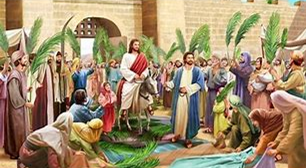
JB Philips translates Matthew 21:8-10 this way, ‘Most of the crowd spread their own cloaks on the road, while others cut down branches from the trees and spread them in his path. The crowds who went in front of him and the crowds who followed him all shouted, “God save the Son of David! ‘Blessed is he who comes in the name of the Lord!’ God save him from on high!” As He made His dramatic entrance into Jerusalem, the whole city was shaken.’
For three years Jesus had proclaimed the good news of the coming kingdom of God, He had preached to thousands about God’s amazing grace and boundless love and He had performed many astonishing miracles. He was indeed the ‘man of the moment’, the ’celebrity’ that everyone wanted to see.
What a contrast that was to the welcome He had received at His birth in a stable in Bethlehem when a few poor shepherds had greeted His arrival. But on that Sunday, the streets of Jerusalem were packed with excited crowds.
While the people were unaware of the full implication of the event they were witnessing, they were fully aware that something of stupendous significance was taking place.
2. Context
For many centuries the Jews were yearning for the arrival of a deliverer from God, a Messiah (which in Hebrew means ‘anointed one’), one who would reestablish the kingdom rule of King David, and when Jesus rode into Jerusalem on a donkey that Sunday, they thought that promised day had arrived. Loudly and enthusiastically they welcomed Jesus into Jerusalem as their long-awaited Messiah. And the Roman authorities would have been very concerned at this demonstration!
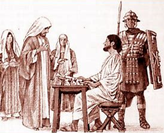
For around 100 years they had ruled over Judah and the Jews deeply resented the Roman occupation of their land and longed for their independence. Apart from the inevitable religious unease and cultural differences, the paying of the heavy taxation demanded by the Romans also infuriated the Jews. So one can understand the reason for the great excitement of the Jews on that particular Sunday when they saw Jesus enter Jerusalem in such a deliberately dramatic and impressive way.
When Jesus rode into Jerusalem on a donkey, they recognised that this was the fulfilling of the prophetic message of Zechariah who, around 500 years earlier, had written, ‘Rejoice greatly, O Daughter of Zion! Shout, Daughter of Jerusalem! See, your king comes to you, righteous and having salvation, gentle and riding on a donkey, on a colt, the foal of a donkey’ (Zecheriah 9:9).
For generations they had awaited the coming of a new ‘Golden Age’ when they would be earth’s foremost nation. To the excited crowds that lined the streets it seemed that that day had finally arrived! Their deliverer from the oppression of the Romans was revealed! Their king had come! For the cheering crowd it was a day of celebration and joyful anticipation.
Jesus’ spectacular entrance into Jerusalem had been carefully planned. It was launched on the first day of the last week of His life and it marked the beginning of the end of His earthly ministry. After His dramatic entrance into the city, the crowds likely anticipated more spectacular events to follow. But if their expectation was that this ‘Messiah’ would lead them in battle against their Roman enemies, subsequently they were to be greatly disappointed!
That Palm Sunday evening, as the exciting and tiring day of celebration ended, Jesus went to the home of His friends Mary, Martha and Lazarus who lived in Bethany which was about three kms from Jerusalem and there He stayed the night. It had been a tiring day for Him but a testing week lay ahead.
3. Continuation
Let’s briefly consider a few of the main events in the week that followed:
Monday:
Jesus cleansed the temple by driving out the traders and cheating money changers.
Tuesday:
He denounced the scribes and Pharisees, calling them hypocrites for not practising what they preached! Later that day Jesus spoke to His disciples about His Second Coming and the End of the Age.
Wednesday:
At the house of Simon the leper, a woman anointed Jesus’ head with an expensive perfume. The response of the disciples to this was, ‘What a waste of money! It could have been used to help the poor!’ Jesus rebuked them saying, ‘Why are you bothering this woman? She has done a beautiful thing for me.’ Later that night Judas made plans to betray Jesus.
Thursday:
That evening when Jesus was eating with His disciples, to their disbelief He told them, ‘One of you is going to betray me.’ He then introduced them to the meal that we now call the Lord’s Supper (or Holy Communion). Judas slipped away and shortly after that Jesus was arrested by the Roman authorities.
Friday:
He was rejected, sentenced to death and suffered the jeers of the people who had excitedly welcomed Him as the Messiah just five days earlier. Then He was killed!
Had Jesus therefore lived in vain? During His three-year ministry He had preached a message of love and of forgiveness of sin and of reconciliation with God and He had promised eternal hope to all who would respond to His message. He had affirmed God’s love for all people and had opposed all that would diminish the value of human life. And their incensed response was ‘Crucify Him.’
4. Crucifixion
There is great irony in the fact that those who were so vociferous in their welcoming of Jesus on Sunday were just as vociferous in rejecting Him the following Friday. Even though Pilate attempted to release Him, they kept on shouting, ‘Crucify him! Crucify him!’ (Luke 23:21). Jesus did not fit into their expectations, and so, in less than a week their chants of welcome had changed from, ‘Hosanna’ (save us) to ‘Crucify him!’
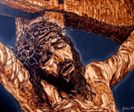
To their delight Jesus was not released by Pilate but was whipped and humiliated. The Roman soldiers then joined in the mockery and made a crown of thorns which they placed on His head saying, ‘Hail, King of the Jews and they smacked His face. And when He was nailed to the cross on Calvary, He was assaulted by the jeers and contempt of the crowds as they watched Him hanging there in agony. They cried out to Him in mockery, ‘He saved others, … but he can’t save himself! He’s the King of Israel! Let him come down now from the cross, and we will believe in him’ (Matthew 27:42).
The irony was that this man, Jesus, truly was the Messiah for whom they had eagerly awaited for centuries. And when He arrived, they rejected Him! What a demonstration of the human fickleness in which we all share.
Humanity’s role in rejecting and killing Jesus Christ was demonstrably an act of gross injustice that resulted in profound suffering for Him.
The darkest time in human history was displayed that day when for three hours darkness inexplicably descended. Yet that ‘darkest time’ profoundly revealed the reach of God’s love for all humankind. ‘God demonstrates His own love for us in this: While we were still sinners, Christ died for us’ (Romans 5:8).
No, He didn’t come down from old rugged cross— but He rose from the grave on what we term Resurrection Sunday affirming for all time that death has no authority over Him!
On Palm Sunday, when He entered Jerusalem, Jesus was affirming His Messiahship and on the following Sunday— Easter Day— He vindicated that proclamation by His resurrection which demonstrated His victory over sin and death and uniquely affirmed that He truly is the King of Kings and Lord of Lords!
As we live in this proud, confused, corrupt and God-rejecting world in which Christians are being killed by the thousands, and in which God’s values are rejected as irrelevant, and in which Jesus is mocked, and scorned and denied, let us embrace the advice of the writer of Hebrews, ‘Let us fix our eyes on Jesus, the author and perfecter of our faith, who for the joy set before Him endured the cross, scorning its shame, and sat down at the right hand of the throne of God’ (Hebrews 12:2).
But there is more to be added! Jesus is coming back one day as the sovereign Lord over all. The prophet Zechariah described His coming in this way, ‘The Lord will be king over the whole earth. On that day there will be one Lord, and His name the only name’ (Zechariah 14:9). He truly is the King of Kings and Lord of Lords and the day of His return draws ever nearer!
God still offers to those who trust In Jesus the gifts of forgiveness, reconciliation and eternal life in Jesus’ presence. That’s an offer too marvellous to be rejected!
All hail King Jesus!
___________________________________________
Dr Jim McClure, author of several books and Bible studies, offers them free in electronic version in EPUB, Kindle and PDF formats. Particularly recommended is — Looking for Answers in a Confusing World. Questions seeking enlightenment on biblical perspectives are welcomed. Link: jbmcclure@gmail.com.
___________________________________________
 Connecting with You!
Always great thoughts from Dr Jim.
Jesus didn’t come down from the cross, but we wait on His coming down from heaven as you say. The words of an old song put it like this:
‘He didn’t come down oh no He didn’t come down, ten thousand angels were camped all around, He could have called them to set Him free, but He stayed on the cross for you and for me.’