
(July 09, 2025) Dr Jim McClure shares deep insights regarding the book of Zephaniah…
Have you ever wondered what God is like?
In his book The Knowledge of the Holy the theologian A.W. Tozer wrote, ‘What comes into our minds when we think about God is the most important thing about us.’
That statement is very challenging to us because our perception of God and His values by which we live will have a significant influence on our character and behaviour and consequently on our relationships with others. Clearly, therefore, what we think of God is of great significance.

Another viewpoint was given by C. S. Lewis in his book The Weight of Glory in which he expressed this opinion, ‘How God thinks of us is not only more important, but infinitely more important. Indeed, how we think of Him is of no importance except in so far as it is related to how He thinks of us.’
While both writers differ in what they considered to be the ‘most important’, that is, what we think of God or what God thinks of us, I believe that both positions have considerable merit and that both are found in the book of Zephaniah. The lifestyle of the people at that time clearly demonstrated what they thought of God, and His message, given by Zephaniah, unmistakeably revealed what He thought of them!
Background
Who was Zephaniah? He introduced himself in the opening words by tracing his genealogy back four generations to Hezekiah who had ruled over Judah around 715 to 687 BC. Hezekiah’s reign followed that of the destructive reign of his father, King Ahaz, who had promoted the worship of idols and even sacrificed his own children in the fire in his worship of the pagan god Molech (2Chronicles 28:3). Under Ahaz the people of Judah had fallen into moral and spiritual ruin.
Hezekiah’s commitment to Yahweh stood in stark contrast to that of his father. In Hezekiah’s reign the worship of God and obedience to His moral commands again became the focus of life in Judah. ‘This is what Hezekiah did throughout Judah, doing what was good and right and faithful before the Lord his God. In everything that he undertook in the service of God’s temple and in obedience to the law and the commands, he sought his God and worked wholeheartedly’ (2Chronicles 31:20-21). By aligning himself with his ancestor Hezekiah, the prophet Zephaniah was identifying with the values of that good king who had sought to promote spiritual and moral values in a nation that was once again in decline.
Zephaniah was a contemporary of Josiah who was just eight years old when he became king (2Chronicles 34:1). In the eighth year of his reign, when he was just 16 years old, ‘he began to seek the God of his father David. In his twelfth year he began to purge Judah and Jerusalem of high places, Asherah poles, carved idols and cast images’ (2Chronicles 34:3). When he was 26 years old, around 622 BC, while the temple in Jerusalem was being renovated, a copy of the book of Deuteronomy was discovered.
Following his reading of that book and being profoundly impacted by its message of the importance of faithfulness and obedience to God’s commands, King Josiah sought to turn his idolatrous, corrupt and complacent nation back to God. Zephaniah’s ministry took place around the same time and he also declared a message of the need of repentance and a renewed and vital relationship with God.

Zephaniah did not wrap up his message of the seriousness of divine judgment in soothing and unoffending terms. He told it as it was, preaching uncompromised messages of rebuke and warning! As such, much of this book makes for uncomfortable reading!
1. Complaint (1:2-13)
Zephaniah’s prophecy of the destruction and annihilation of many people is upsetting. His words are directed to a society which had lost its spiritual and moral compass and consequently had lost its sense of who God is and what God requires.
He used such graphic phrases as ‘sweep away’ and ‘cut off’— ‘“I will sweep away everything from the face of the earth,” declares the Lord. “I will sweep away both men and animals; I will sweep away the birds of the air and the fish of the sea. The wicked will have only heaps of rubble when I cut off man from the face of the earth”’ (v2-3). The imagery is disturbing— and meant to be so! The nation of Judah had become decadent socially and spiritually.

The people had abandoned God, were worshipping false gods and were engaged in pagan rituals. Consequently, God unambiguously stated through Zephaniah that He would punish the nation of Judah and all the people who lived in the city of Jerusalem. He would extinguish every trace of the worship of Baal including the pagan priests. He would destroy those who sought no relationship with Him and had dismissed Him from their lives, those who worshipped the sun, the moon, and the stars and those who falsely claimed to worship God while they were actually committed to pagan worship.
The complaint was particularly directed against four classes of people—
(i) The Ruling Classes (v8)
God declared, ‘On the day of the Lord’s sacrifice I will punish the princes and the king’s sons and all those clad in foreign clothes.’
The phrase, ‘the day of the Lord’s sacrifice’ was not a reference to the animal sacrifices offered to God but to the people themselves who would be the ‘sacrifice’! This was a prophetic message about an event that occurred about 40 years later when Nebuchadnezzar’s mighty Babylonian army invaded Jerusalem pulling down the walls and destroying the temple. Thousands of the inhabitants of Judah were killed and many were deported to Babylon. Their anguish is eloquently expressed in Psalm 137 which begins with the words, ‘Beside the rivers of Babylon we thought about Jerusalem, and we sat down and cried.’
God said, ‘I will punish the princes and the king’s sons and all those clad in foreign clothes’ (Zephaniah 1:8).The ruling classes loved being dressed in the elaborate style of the rich people of other nations.
Ezekiel, who was one of those who had been captured and taken into exile to Babylon around 30 years after Zechariah, had given a prophecy also commenting about this same worldly desire: ‘You say, “We want to be like the nations, like the peoples of the world, who serve wood and stone”’ (Ezekiel 20:32).
In Zephaniah God was declaring that worldliness had seized the wealthy ruling classes.
(ii) The Religious Deviants (v9)
The historic beliefs of the Jews were centred on Almighty God, the creator of heaven and earth, who had brought them out of slavery in Egypt and had led them to the Promised Land. Those core beliefs were being discarded and replaced by religious opinions and values that were diametrically opposed to all that the Lord had revealed to them.
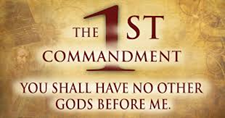
God had plainly told them through Moses, ‘You shall have no other gods before me. You shall not make for yourself an idol in the form of anything … You shall not bow down to them or worship them’ (Exodus 20:3-5), Despite the lucidity of those commands they had blatantly ignored them. God’s warning was explicit, ‘On that day I will punish all who avoid stepping on the threshold, who fill the temple of their gods with violence and deceit’ (Zephaniah 1:9).
(iii) The Rich (v10-11)
The area called ‘Fish Gate’ was a vital trade hub for the city particularly for the fishermen who sold their catch to the people of Jerusalem. This was a very important area for commerce.
The ‘New Quarter’ was where the ‘rich people’ lived in their grand houses. Yet Zephaniah revealed to them that their wealth and lavish lifestyle would not protect them from the judgment to come.‘Wail, you shopkeepers on Market Street! Moneymaking has had its day. The god Money is dead…’ (v11Message).
(iv) The Relaxed (v12-13)
The focus then turned on those who were easy-going, laid-back and quite indifferent to what was happening around them. To them ignorance was bliss! They believed in God’s existence but their awareness of His requirements was virtually non-existent. Consequently they were relaxed in and indifferent to what was taking place in their nation— and Zephaniah’s messages directly challenged their complacency.
God clearly was of little relevance to them but He told them, ‘At that time I will search Jerusalem with lamps and punish those who are complacent, who are like wine left on its dregs, who think, “The Lord will do nothing, either good or bad”’(v12).
But their conclusions were so widely off the mark! ‘Their wealth will be plundered, their houses demolished. They will build houses but not live in them; they will plant vineyards but not drink the wine’ (v13).

Because of the foregoing moral and spiritual aberrance, the prophetic message continued with a conclusion— which I’ll share in Part 2 later this week.
__________________________________________

Dr Jim McClure, author of several books and Bible studies, offers them free in electronic version in EPUB, Kindle and PDF formats.Particularly recommended is— Looking for Answers in a Confusing World.Questions seeking enlightenment on biblical perspectives are welcomed. Link: jbmcclure@gmail.com.
___________________________________________
 Connecting with You!
Always excellent teaching from Dr Jim, look forward to part 2.