 Tait Berge asks, ‘How does God see people who have disabilities and why should you care?’
I grew up attending a United Methodist church. My parents took my brothers and me weekly to church and Sunday school. We prayed at home, celebrated holidays, and church was important. I went to Vacation Bible School and confirmation. I asked questions about God and my faith.
My faith was important to me, and I thought I was ‘in.’ In reality, I had my parents’ faith and was living on what they taught and from tradition. When starting out living on my own, I went to church because that’s just what people did. I didn’t really understand the basics.
Three questions
I became serious about my faith in 1996 and signed up for a Disciple Class. My life was a mess. I had a strained relationship with my father, didn’t know what to do with life, and having a disability didn’t help matters. I began wondering why God permitted me to have a disability and I was angry.
I was born with cerebral palsy, used a wheelchair, and my speech was difficult to understand. I had moved into a small apartment two years earlier and had people coming in daily to help with personal care needs, such as bathing and dressing. I attended community college for a degree in journalism.
I had gotten along pretty well up to then with the typical ups and downs. Whatever obstacles my disability presented I overcame with hard work and American pride and determination. Until then, I hid my frustrations well and felt I could overcome anything. But 1996 was different. I started to ask questions …
• ‘Why am I here?’
• ‘What is the purpose of life?’
• ‘Why did God give me disability?’
The 34-week class was the start of trying to answer the questions. My first major encounter happened after reading Exodus 4:11: ‘The Lord said to him, “Who gave human beings their mouths? Who makes them deaf or mute? Who gives them sight or makes them blind? Is it not I, the Lord?’”’
I cried when first reading those words. God really did give me my disability and really did care. When finally realising God knew me before I was born (Psalm 139) and had a plan for my life (Jer. 29:11), I began letting go of my tough guy, get-through-anything attitude and gave my life to the Lord.

Tait and his faithful dog going to Sunday service
Ordained disability!
That is when I knew beyond a shadow of doubt he had ordained my disability.
I am convinced Exodus 4:11 – and the entire fourth chapter for that matter – ought to be the starting point for anyone developing a disability theology. God shows he can use us no matter what’s in our hands.
For Moses, it was his rod, and for me, my wheelchair. He doesn’t take poor speech as an excuse. Aaron was Moses’ mouthpiece. Today, I use a computer to write and have my own ‘Aarons’ to help in certain situations.
It is clear from these scriptures that God has a special plan for every person with a disability. They are not excluded.
I also found that David had enquired about Mephibosheth, who had a disability. David could have killed him, but chose to embrace Mephibosheth as a family member by rewarding him with a coveted place at the king’s table.
Jesus’ healings did much more than show his divinity. He also freed people from their disabilities and enabled them to belong to a community and develop closer relationships. One of my favourite scriptures is John 14:12: ‘I tell you the truth; anyone who has faith in me will do what I have been doing. He will do even greater things than these, because I am going to the Father.’
We will do greater things than Jesus! Is that possible? The miracle today more often than not does not involve a person with a disability experiencing a complete healing, such as rising from a wheelchair to walk, but more often involves a person using a wheelchair telling others of God’s love for them.

Man with Down Syndrome starts his day in prayer
Largest unreached people group
The ten percent of the world population with a disability could be considered the largest unreached people group. Only one person with a disability in 20 attends a church. Many have not heard the gospel. And what if we do nothing?
Love for Jesus, the world, and people created by God should give reason enough for us to offer hope in Christ.
I believe there are four rights everyone in the world should have. The right to…
1) Hear the gospel
2) Receive Christ
3) Grow in Christ
4) Serve Christ.
In my ministry, I find most people are in total agreement on the first three rights. The fourth, however, causes problems. It’s fine and perhaps compassionate to take care of people with disabilities, but to let them serve? That pushes some people outside of their comfort level.
They question if ‘John’ – who has autism – can really pass out bulletins because he ‘looks funny’ and sometimes ‘acts funny.’ This can’t happen, these people think. Or, they think, how can ‘Susan’ whose speech can barely be understood, read Sunday morning scripture? Why, she would embarrass herself and the church.
Yet people with disabilities have done all those things and more when given a chance. The church ought to put its best foot forward!
God uses disabilities
In John 9:3, the disciples ask Jesus an important question. In the Jewish mindset, disability was linked with sin: You or your parents must have sinned. The disciples wanted to know what caused disability. Jesus said: ‘Neither this man nor his parents sinned, but this happened so the works of God might be displayed in him.’
I believe God ordained my disability. I use a wheelchair and my speech is difficult to understand in order to somehow bring glory to God. Jesus says so. This blows my mind. I often struggle with my physical disability, have episodes of depression, and experience life’s anxieties. Yet God uses my disability to show his glory!
I don’t understand it, but know it’s true. My friends at church tell me so. When hearing me sing, they say they feel as if they are in the presence of the Lord. When seeing me in line for communion, my minister has said he knows God is with me and thinks the church wouldn’t be the same without me.
Christ’s church is more complete when people with disabilities become a part of it.
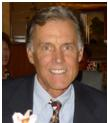
Tait Berge is an ASSIST special correspondent and has written three books. Church Relations Director for Mephibosheth Ministry (www.mephiboshethministry.org), an organisation that encourages churches to include people with special needs in their congregation, he holds a Bachelor of Arts degree in Leadership and Ethics from Nazarene Bible College. Tait lives in Colorado Springs and attends International Anglican Church. He has written three books. Links: www.taitberge.com / taitberge510@comcast.net.
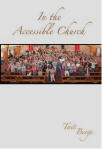
***This ASSIST feature (www.assistnews.net) is an excerpt of Tait’s book, In the Accessible Church. To order a copy of this excellent book, visit www.amazon.com.
In this book, Tait encourages church leaders who believe the Lord loves people with disabilities, but might not be aware people with disabilities have so much to offer. Tait’s sharing of his experience encourages and teaches churches how to incorporate people with disabilities into the workings of church. It is important for people with disabilities to serve and not just be served.







 Connecting with You!