
(June 11, 2025) Dr Jim McClure concludes his Malachi series, one that is so relevant today…
In Parts 1 and 2 we explored the ‘Prevailing Background,’ the ‘People’s Rebuke’ and the ‘Pertinent Questions’ in the book of Malachi. In this final part we shall explore the ‘Prophetic Proclamations’ and ‘Promises concerning the future.’
4. Prophetic Proclamations (Chapter 3:1-6 and 4)
While the first three chapters of Malachi largely addressed the corruption and spiritual emptiness of the Jews in his day and their aggressive unwillingness to acknowledge their failures, a few verses in chapter 3 and the fourth chapter give further insight into God’s redemptive work for humankind.

As the Old Testament message drew to a close, Malachi indicated that there was more to come! Following his ministry there was a period of 400 years of silence before a prophetic voice would again ring out in Judah announcing the dawning of a new day.
However, before he concluded his ministry, Malachi prophetically gave insight into some of those future events.
(i) Response
The first reference to the future appears as part of the reply to the argumentative question asked by the priests, ‘Where is the God of justice?’ (2:17). In the response given in Malachi 3:1-6 two ‘messengers’ are mentioned. It began with a promise, ‘See, I will send my messenger, who will prepare the way before me’ (3:1).

- Isaiah 40:3 also uses a similar reference to this coming person who would ‘Prepare the way for the Lord.’
- Four hundred years later, when John the Baptist was born, his father Zechariah declared, ‘You, my child, will be called a prophet of the Most High; for you will go on before the Lord to prepare the way for Him’ (Luke 1:76).
- And in John 1:23 John the Baptist personally identified himself as the one spoken about by Isaiah the prophet, ‘I am the voice of one calling in the desert, “Make straight the way for the Lord.”’
- However, having identified the first ‘messenger’ in Malachi 3:1 as John the Baptist, the verse refers to a second ‘messenger’— ‘Then suddenly the Lord you are seeking will come to His temple; the messenger of the covenant, whom you desire, will come,” says the Lord Almighty.’
- The ‘messenger of the covenant’ is a reference to Jesus Christ who, at His Second Coming will come powerfully and majestically— ‘They will see the Son of Man coming on the clouds of the sky, with power and great glory’ (Matthew 24:30).
The people had previously petulantly asked ‘Where is the God of justice?’ (2:17). However, they may not have been enthused by the reply, ‘Who can endure the day of His coming? Who can stand when He appears? For He will be like a refiner’s fire or a launderer’s soap’ (3:2). To them that day would not be one of restored prosperity but of judgment and cleansing!
(ii) Retribution
In chapter 4 the theme of the application of God’s justice is continued and retribution forms a part of it. It tells us about a day in the future when God’s righteous judgment will be fulfilled. ‘“Surely the day is coming; it will burn like a furnace. All the arrogant and every evildoer will be stubble, and that day that is coming will set them on fire,” says the Lord Almighty. “Not a root or a branch will be left to them”’ (4:1). Malachi 3:2 above is also a reference to that day!
Jesus used similar words in Matthew 13:49-50 when He spoke about the coming day of judgment. The point is that God is dishonoured when His commands are ignored and the consequences will be severe as those who disregard Him will discover. Malachi’s prophecies of judgment must still await their final fulfilment on that future day of Christ’s return.
And while we may wish to avoid reflecting on such a theme, it is, however, one that we must not ignore! Throughout the Bible there are many accounts of the exercise of divine retribution.

- It began in the Garden of Eden after Adam and Eve’s disobedience to God’s explicit command, ‘You must not eat from the tree of the knowledge of good and evil, for when you eat of it you will surely die’ (Genesis 2:17). But they ignored that directive and discovered the severe consequence of God’s retribution (Genesis 3:23-24).
- The people in Noah’s day also discovered it (Genesis 6 and 7).
- As did Pharaoh when he refused to release the Israelites and his nation experienced the consequences of God’s judgment (Exodus 12:29).
- Many of the prophets gave stark warnings of impending retribution when people disregarded His moral and spiritual values.
- Jesus also spoke about the reality of God’s retribution in, for example, Matthew 25:46, ‘Then they will go away to eternal punishment, but the righteous to eternal life.’
- Paul made various references to it and gave the warning, ‘Do not be deceived: God cannot be mocked. A man reaps what he sows’ (Galatians 6:7).
- Finally, John in the book of Revelation vividly portrayed divine retribution in the context of the end times and vividly described the final judgment in Revelation 20.
The graphic descriptions of that day of division given in both the Old and New Testaments underlines how critical this issue is.
(iii) Redemption
The next verse stands in stark contrast to the previous one. Here we see that God’s justice is also demonstrated in redemption. The context concerns the ‘Day of the Lord’, a term that is frequently used in the Bible and is the time when God vindicates His people and judges sin. ‘But for you who revere my name, the sun of righteousness will rise with healing in its wings. And you will go out and leap like calves released from the stall’ (4:2).
The coming of this vindication is compared with sunrise when the light banishes the darkness. The promise is one of redemption for ‘you who revere my name.’ For them the rising of ‘the sun of righteousness’ points to that future day when Jesus Christ shall return.
Righteousness means being in a right standing with God and this is attained for us through Jesus. Paul wrote, ‘God made Him who had no sin to be sin for us, so that in Him we might become the righteousness of God’ (2Corinthians 5:21).
The day of Jesus’ return will see a reversal of what has been— the defeat of evil and the victory of good (4:3). Towards the end of Romans Paul echoed this affirmation, ‘The God of peace will soon crush Satan under your feet. The grace of our Lord Jesus be with you’ (Romans 16:20).
(iv) Remember
As Malachi’s prophecy draws to a close, a blunt challenge is given to those addressed— ‘Remember the law of my servant Moses, the decrees and laws I gave him at Horeb for all Israel’ (4:4).

They professed to be ‘God’s people’ but in practice they were not! Their disregard of God’s Law and their lifestyle exposed the reality that the values given to them through Moses had been largely ignored and forgotten. The challenge to them in this verse was not just to recall the laws and decrees handed down from Moses but to have a lifestyle that is grounded on them.
- This challenge is addressed also to us! We may profess to be Christians but unless our profession is endorsed by our actions, they are meaningless.
- Jesus said, ‘These people honour me with their lips, but their hearts are far from me’ (Matthew 15:8).
- Paul also warned about those who wrote about those who ‘claim to know God, but by their actions they deny Him’ (Titus 1:16).
- Inconsistency between what we profess and how we behave discredits us and dishonours God.
4. Promise (Chapter 4:5 – 6)
As the prophecy of Malachi draws to a close, there is a reference to a future event that is described as the ‘great and dreadful day of the Lord’ (4:5). The Hebrew word that is translated as ‘dreadful’ may also be translated ‘awesome.’ On that day history, as we know it, will come to a glorious end.
God’s promise is that before that ‘great and dreadful’ day arrives He will send the prophet Elijah whose profound ministry ‘will turn the hearts of the fathers to their children, and the hearts of the children to their fathers.’
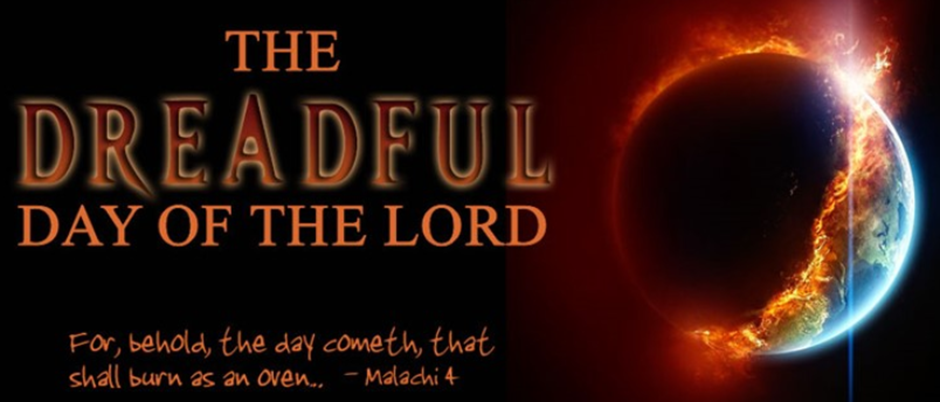
As He sent John the Baptist (who was parallelled with ‘Elijah’) when Jesus began His ministry so, before the final day, He will send Elijah whose ministry will be one of reconciliation and restoration among all ages. Then the ‘great and dreadful day of the Lord’ will draw history to a close!
- Throughout the book of Malachi there has been an emphasis on repentance and God’s final words in the prophecy are very sobering.
- Throughout the prophecy there has been a persistent challenge to the rebellious people to repent and God’s final words are very sobering ‘… or else I will come and strike the land with a curse.’
- The call to repentance is one to which we must always be attentive and be willing to respond to, for an awful judgment awaits those who reject God’s warning.
That is the challenge with which the final book closes as it looks forward to the coming of Jesus. ‘And so we will be with the Lord forever’ (1Thessalonians 4:17).
__________________________________________

Dr Jim McClure, author of several books and Bible studies, offers them free in electronic version in EPUB, Kindle and PDF formats.Particularly recommended is— Looking for Answers in a Confusing World.
Questions seeking enlightenment on biblical perspectives are welcomed. Link: jbmcclure@gmail.com. Link: Malachi-the prophet who revealed God’s answers to people’s questions-part 1&2/
___________________________________________
 Connecting with You!
Any comment I make does not really do justice to Dr Jim’s series on Malachi. Appreciated the closing thoughts about the future ministry of Elijah; can’t remember hearing much if anything about this in the context of God’s ‘end time’ preparation.